

Key takeaways
- Three main methods to refine the alae: the inner technique and outer technique (= alar reduction), plus the nostril rim lift — combined as needed
- Inner technique = nostril size and alar width / outer technique = alar flare / nostril rim lift = thickness and drooping
- It looks simple but easily turns out unnatural, so diagnosis matters. If the nostrils show because of the nose's angle, septal extension is combined
- Fees (tax included): inner technique ¥220,000 / outer technique ¥220,000 / inner + outer ¥308,000 / nostril rim lift ¥242,000. Case photos included
3 ways to refine the alae
Alar concerns are addressed by combining, as needed, three methods that differ in where the incision is made. Start with the overall picture in the diagram.
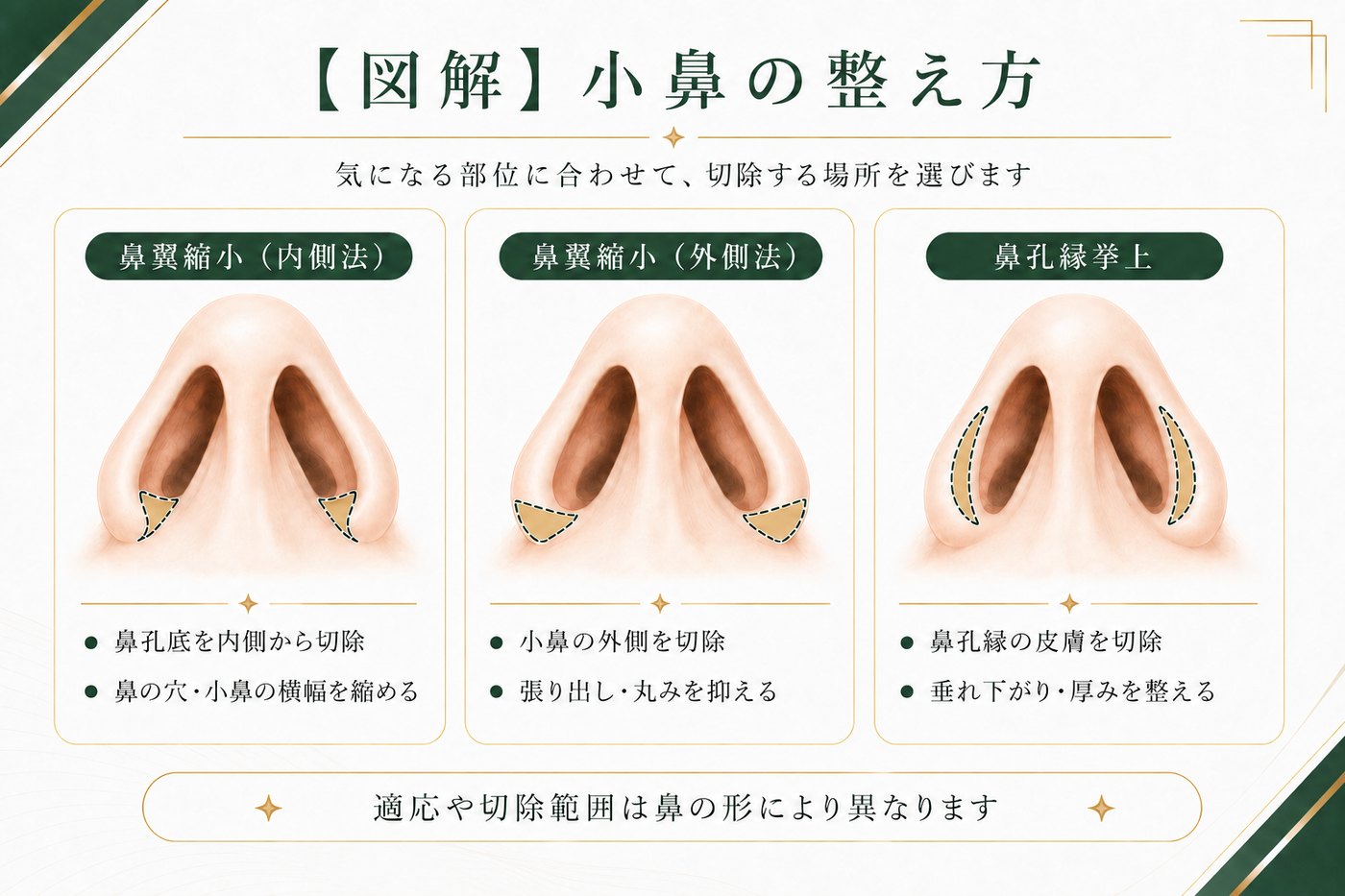
- Inner technique (alar reduction): reduces nostril size and alar width (left in the diagram)
- Outer technique (alar reduction): reduces the outward flare of the alae (center in the diagram)
- Nostril rim lift: makes the alae thinner (right in the diagram)
These three are combined according to your concern (e.g., inner + outer technique).
The 3 methods in detail
The three differ in where the incision is made and what they change. Please view this together with the diagram.
| Method | Incision site | Best suited for |
|---|---|---|
| Inner technique | Nostril sill, from the inside | Large nostrils; narrowing alar width |
| Outer technique | Outside of the ala | Reducing alar flare and roundness |
| Nostril rim lift | Skin along the nostril rim | Thick or drooping nostril wings |
The inner and outer techniques (= alar reduction) address the size of the alae, while the nostril rim lift addresses their thickness — their goals differ. So when both size and thickness bother you, the methods are combined.
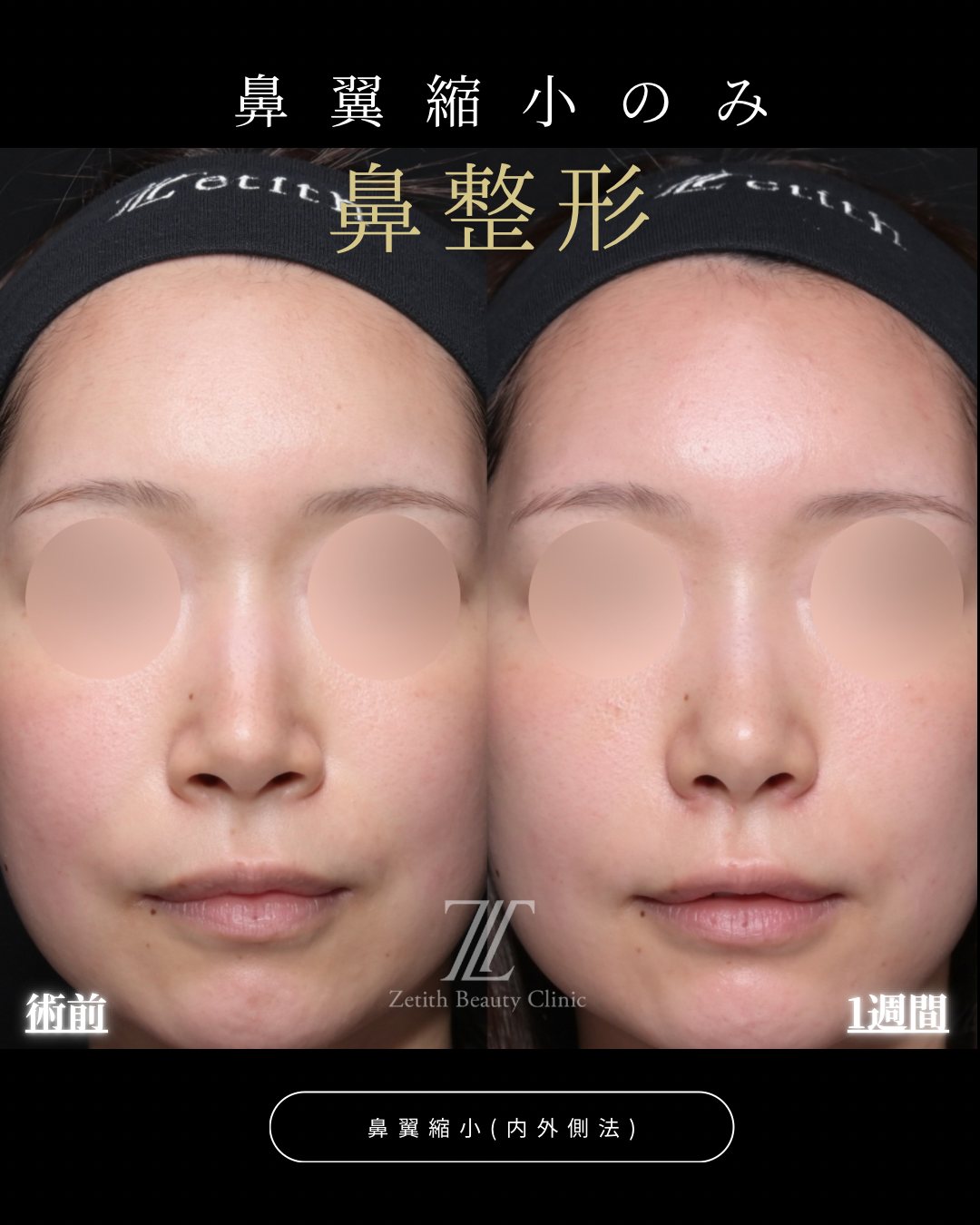
The case featured in this article was treated with the inner + outer techniques.
How to choose — and how to combine
Here is which method suits each concern. When several concerns apply, the methods are combined (suitability is determined at consultation).
| Concern | Suitable method |
|---|---|
| Large nostrils / wide alae | Inner technique |
| Outward flare of the alae | Outer technique |
| Both nostril size and flare | Inner + outer technique |
| Thick or drooping alae | Nostril rim lift |
| Upturned nose with forward-facing nostrils | + septal extension (corrects the tip angle first) |
When prominent nostrils are caused by the angle of the nose, cutting the alae will not change it — instead, we correct the tip angle with septal extension. For how procedures combine across the whole nose, see the complete procedure guide.
3 keys to a beautiful result
Alar surgery looks simple, yet it is where results most easily turn out unnatural. These are the three things we prioritize.
- 1. Don't over-resect: cutting too much looks unnatural and cannot be undone. We remove only what is needed
- 2. Check the balance with the tip: refining only the alae can make a still-large tip stand out even more
- 3. Preserve the natural curve of the nostrils: we suture so the nostrils keep their roundness instead of flattening sideways
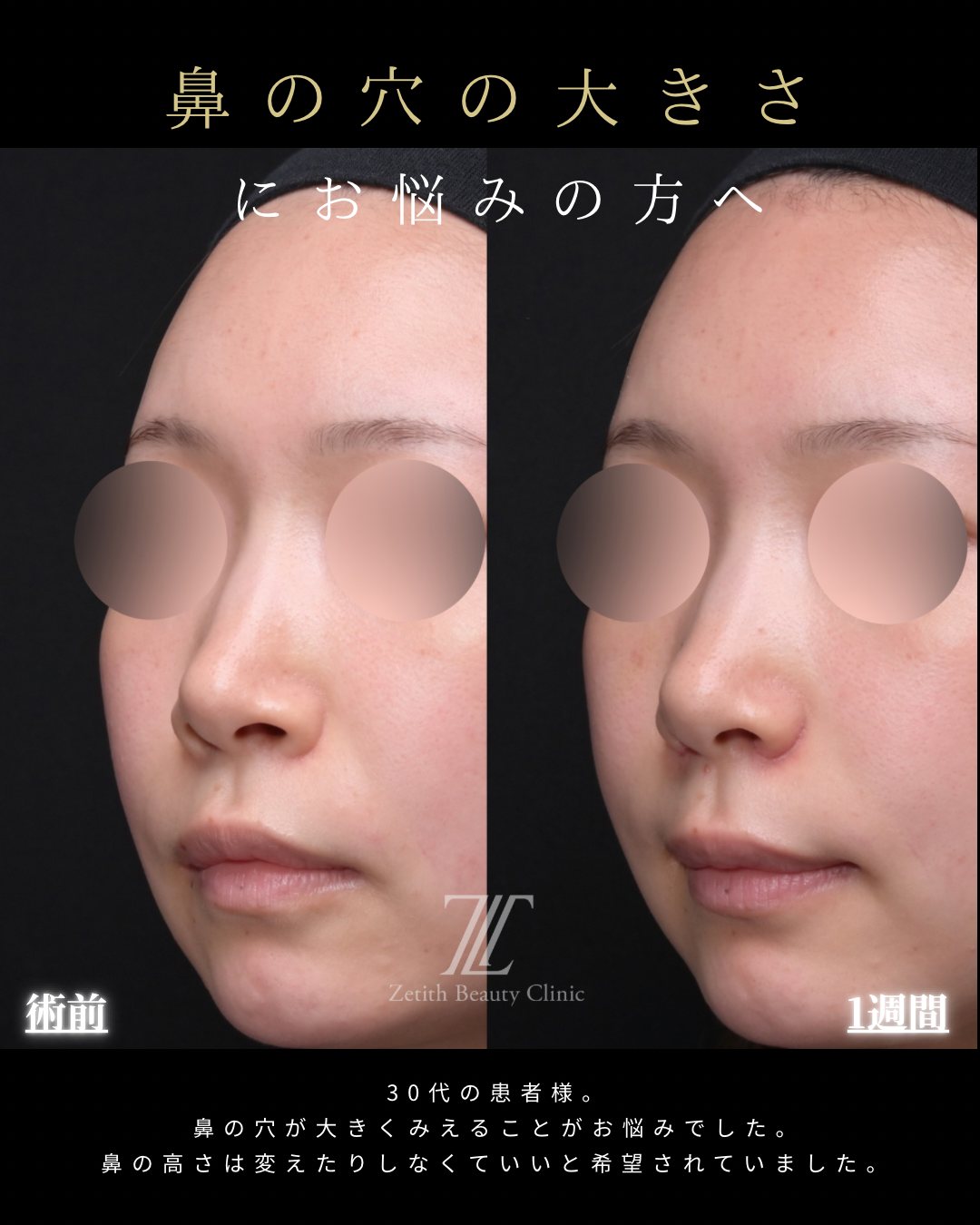
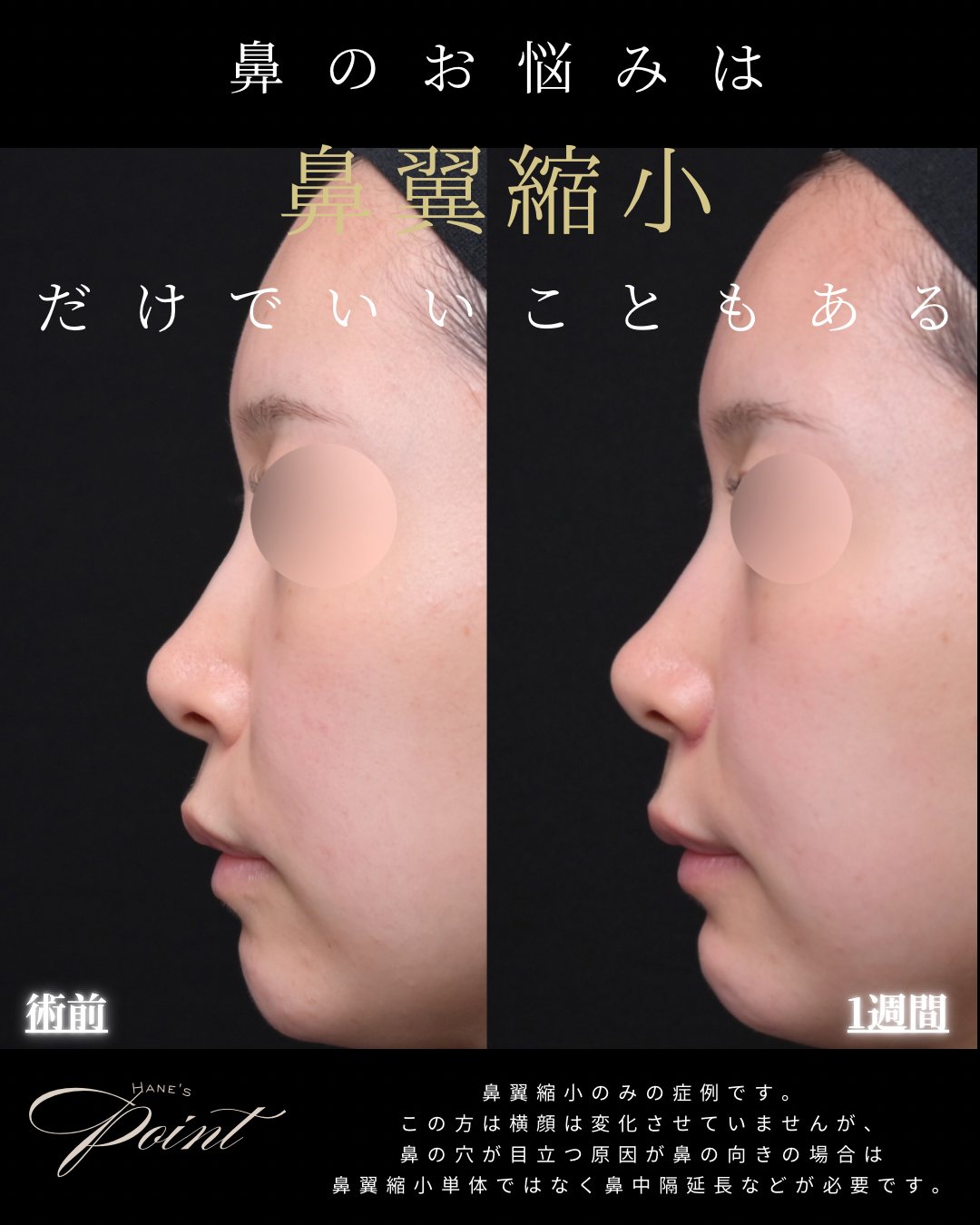
Case (front, oblique, side)
A case treated with alar reduction (inner + outer techniques) only. Use the tabs to switch angles.
Case | Concerned that the nostrils looked large (nose height unchanged) / alar reduction (inner + outer techniques) only
- Procedure
- Alar reduction (inner + outer techniques) only / nose height and tip unchanged
- Fee
- ¥308,000 (tax included / inner + outer techniques)
- Main risks / side effects
- Swelling, bruising, scarring, asymmetry, relapse, tightness, individual variation in results, etc.
- Downtime
- About 1–2 weeks (photos taken 1 week after surgery)
* Patient in their 30s, concerned that the nostrils looked large and preferring that the nose height stay unchanged (published with consent; eye area edited for privacy). Results vary by individual, and risks/side effects apply. Elective treatment (not covered by insurance).
Cost
Fees for each of the three methods (tax included, elective treatment), together with the fees for combining them.
| Alar reduction (inner technique) | ¥220,000 |
|---|---|
| Alar reduction (outer technique) | ¥220,000 |
| Alar reduction (inner + outer techniques) | ¥308,000 |
| Nostril rim lift | ¥242,000 |
More about fees (additional costs / monitor program)
Downtime and risks
Swelling and bruising usually settle within about 1–2 weeks, with stitches removed at around 1 week. Scars take several months to fully settle.
Main risks / side effects
- Swelling, bruising, tightness (usually improving over time)
- Scarring (inside the nostrils for the inner technique / along the alar crease for the outer technique). Redness or firmness may persist depending on your constitution
- Asymmetry, differences in nostril shape, relapse
- Over-resection looks unnatural and cannot be undone (our baseline is a light, conservative reduction)
- Infection, results differing from the desired image, individual variation in outcomes
Frequently asked questions
Will the scars be noticeable?
The inner technique cuts inside the nostrils, so it is hard to see from the outside; the outer technique is sutured along the natural crease at the edge of the ala, so it usually becomes less noticeable over time. The nostril rim lift is also incised along the rim of the nostril. That said, healing varies by individual constitution.
Does cutting more make the alae smaller?
No. Over-resection makes the alae pinch unnaturally, and once cut, they cannot be restored. Our baseline is a "light, conservative reduction." A restrained approach preserves the balance with the tip and the natural curve of the nostrils, and ends up looking more beautiful.
Can you refine only the alae without changing the tip or bridge?
Yes. The case shown here was also treated with alar reduction (inner + outer techniques) only, leaving the nose height and tip unchanged.
I'm also bothered by thick alae and drooping nostril rims.
In that case, combining the nostril rim lift — which thins the rim of the nostril — gives a well-balanced result. Which of alar reduction (inner/outer techniques) and the nostril rim lift to combine, and how, is determined at consultation.
คำถามถัดไปที่ถาม AI ได้
Want to discuss alar or nostril concerns in Fukuoka?
The best method for wide alae or prominent nostrils depends on the cause. A doctor with over 2,000 rhinoplasty cases will examine you and advise you honestly — including whether the alae should be cut at all, and whether septal extension is needed.
* This article is intended to provide general medical information and does not guarantee results. The suitability, costs, and risks of treatment are determined individually at consultation. Results vary by individual. Rhinoplasty and alar reduction are elective treatments not covered by insurance.