

Key Takeaways
- With rhinoplasty, the result depends on where and by whom — choosing well is your best protection against a bad outcome
- The checklist: (1) cases published from every angle, (2) the operating surgeon examines you personally, (3) case volume and specialization, (4) material options, (5) scar care and design range, (6) transparent pricing, (7) honest explanation of risks and revisions
- In particular, whether they publish front, oblique, AND profile views makes results much easier to judge
- Our cases are published from every angle — front, oblique, and profile, each with the procedure, price, and risks clearly stated
Rhinoplasty Results Depend on Where — and on Whom
Even with the same goal of "improving my nose," the result varies enormously depending on diagnosis of the underlying cause, choice of technique, design, and surgical skill. That's why, even before the procedure itself, which clinic and which surgeon you choose is the single biggest factor in avoiding a result you'll regret.
Deciding based only on polished images from ads or social media can lead to outcomes like "it's not the shape I imagined," "my profile looks unnatural," or "I ended up needing a revision." Use the 7 checkpoints in the next section as your yardstick when comparing clinics.
7 Checkpoints to Avoid a Bad Outcome
How can you tell whether a clinic is trustworthy? Here are the seven criteria we consider essential, along with the reasons behind each.
1. Do they publish cases from every angle (front, oblique, profile)?
The nose is a three-dimensional structure, so it needs to look natural and well-shaped from the front, at an angle, and in profile. Cases shown from only one angle tell you nothing about how the result looks from the others. A clinic that publishes front, oblique, and profile views of every case is signaling confidence in both its technique and its results.
2. Does the operating surgeon conduct the consultation and examination personally?
If a counselor drives the whole process and you first meet the surgeon on the day of surgery, a design truly suited to your nose becomes difficult. Confirm that the operating surgeon examines you and decides the design personally.
3. Rhinoplasty case volume and specialization
The nose is a delicate area where recovery from a poor result is difficult. Whether the surgeon has sufficient rhinoplasty experience and case volume, and whether they specialize in noses, are key criteria.
4. Do they offer a range of materials (including autologous tissue)?
Can they choose the right material for your condition — ear cartilage, rib cartilage (harvested from your own body), and so on? A clinic that keeps its options open and never compromises on materials can design a sounder plan than one that only offers a single material or technique.
5. Care for scarring and range of design
Do they offer approaches like the closed technique that keep scars off the visible surface? And do they have the design range to deliver both natural refinement and dramatic change? What matters is that they can design to your wishes — neither locked into subtlety nor locked into drama.
6. Is the price quoted clearly, as a total?
Do they present the full amount up front — not just the surgical fee but additional costs like anesthesia, pre-op tests, and medication? Be wary of estimates that balloon later.
7. Do they explain risks, downtime, and revision policy?
Do they honestly cover not just the upside but risks, side effects, downtime, and what happens if a revision is ever needed? A clinic that glosses over these is one to avoid.
Our Cases (Published Front, Oblique & Profile)
In line with checkpoint 1, we publish all three views — front, oblique, and profile — so you can see the actual result from every angle. Each case lists the procedure, price, and main risks/side effects. Use the tabs to switch angles.
Case 1 | Upturned, short nose / Closed technique: septal extension
- Procedure
- Closed-technique septal extension
- Price
- ¥880,000〜 (varies by material and combination)
- Main risks / side effects
- Swelling, bruising, asymmetry, tip stiffness, relapse, infection, individual variation in results, etc.
- Downtime
- About 1–2 weeks
* Shown from three angles: front, oblique, and profile. Results vary by individual, and risks and side effects may occur. Elective (non-insured) procedure.
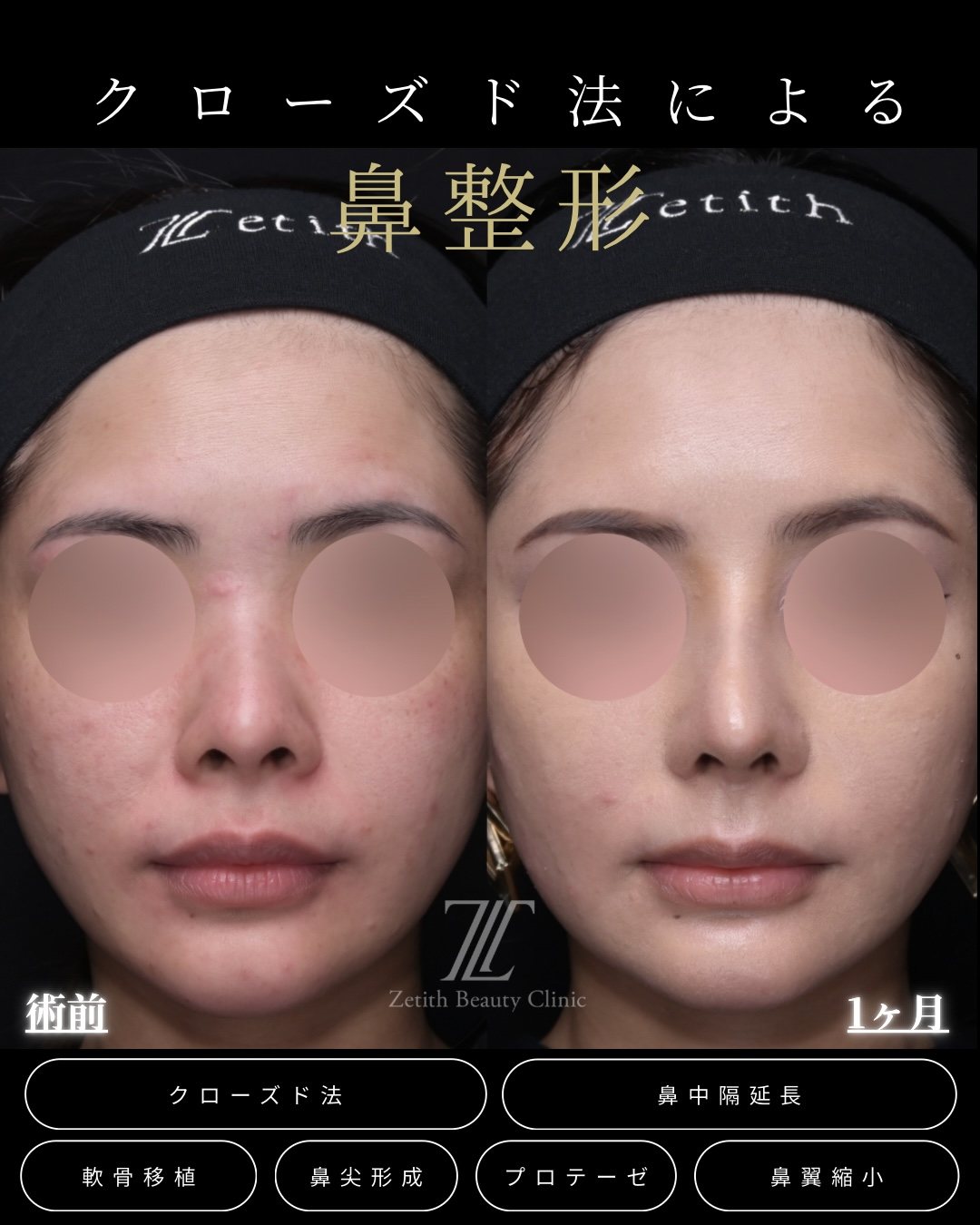
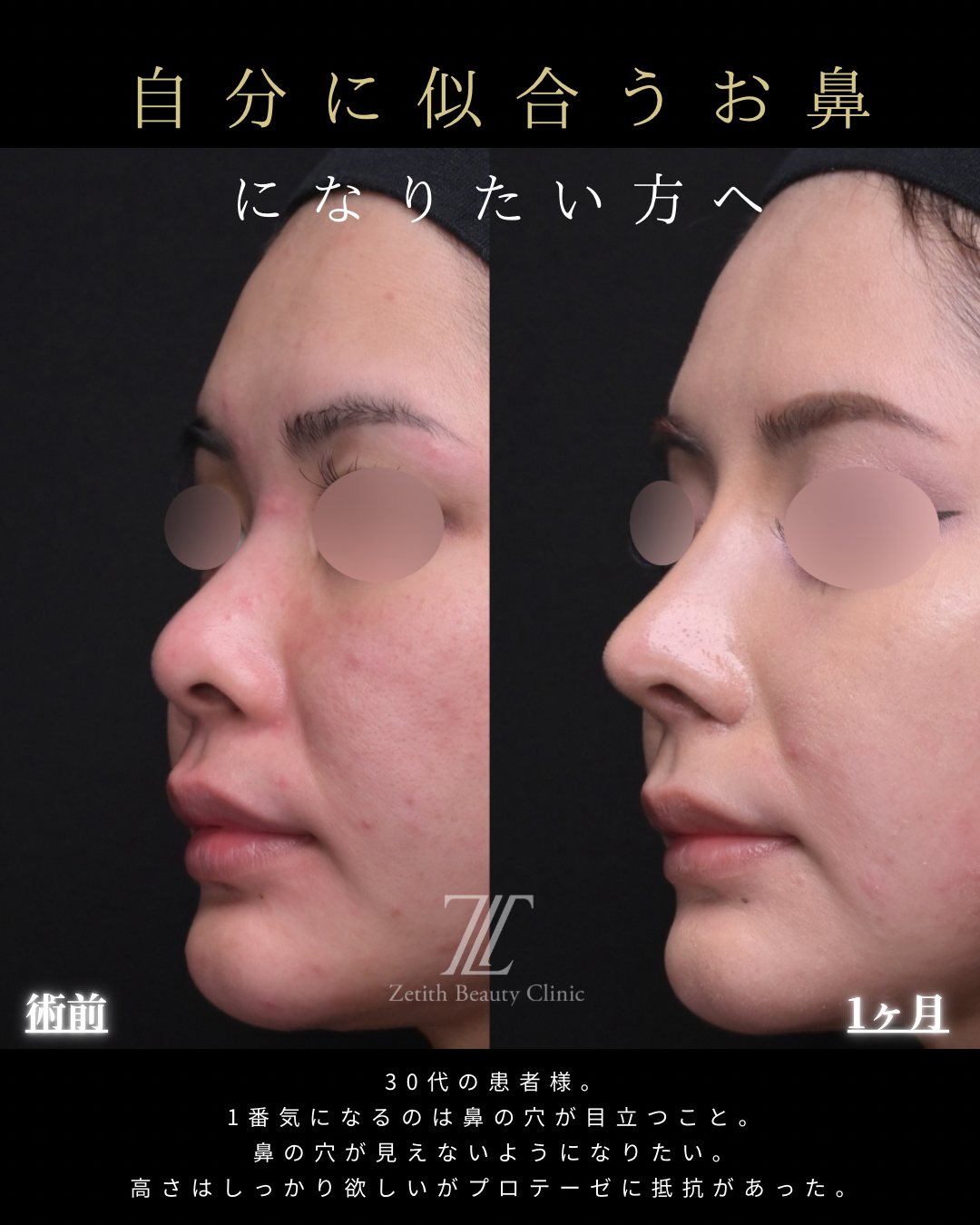
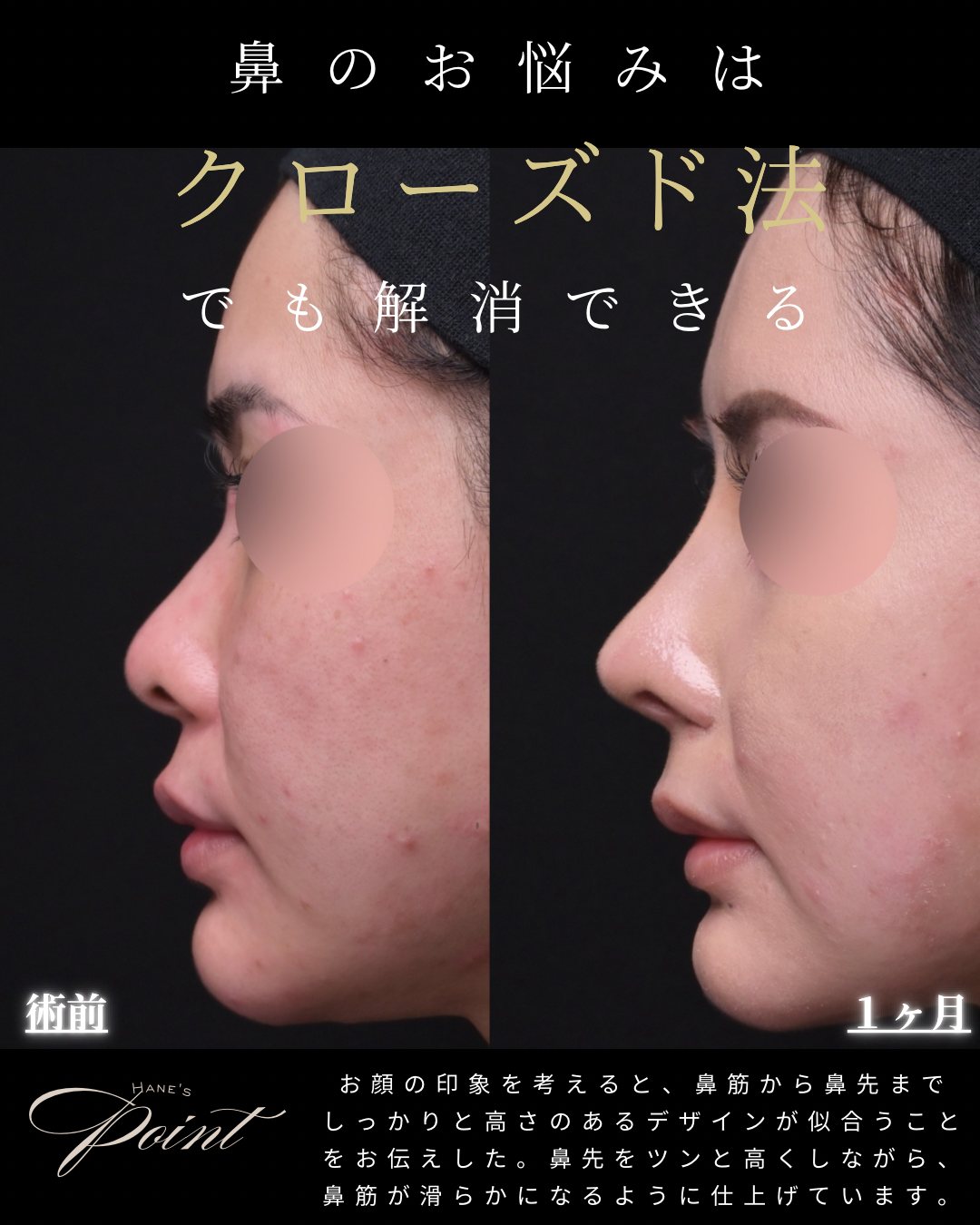
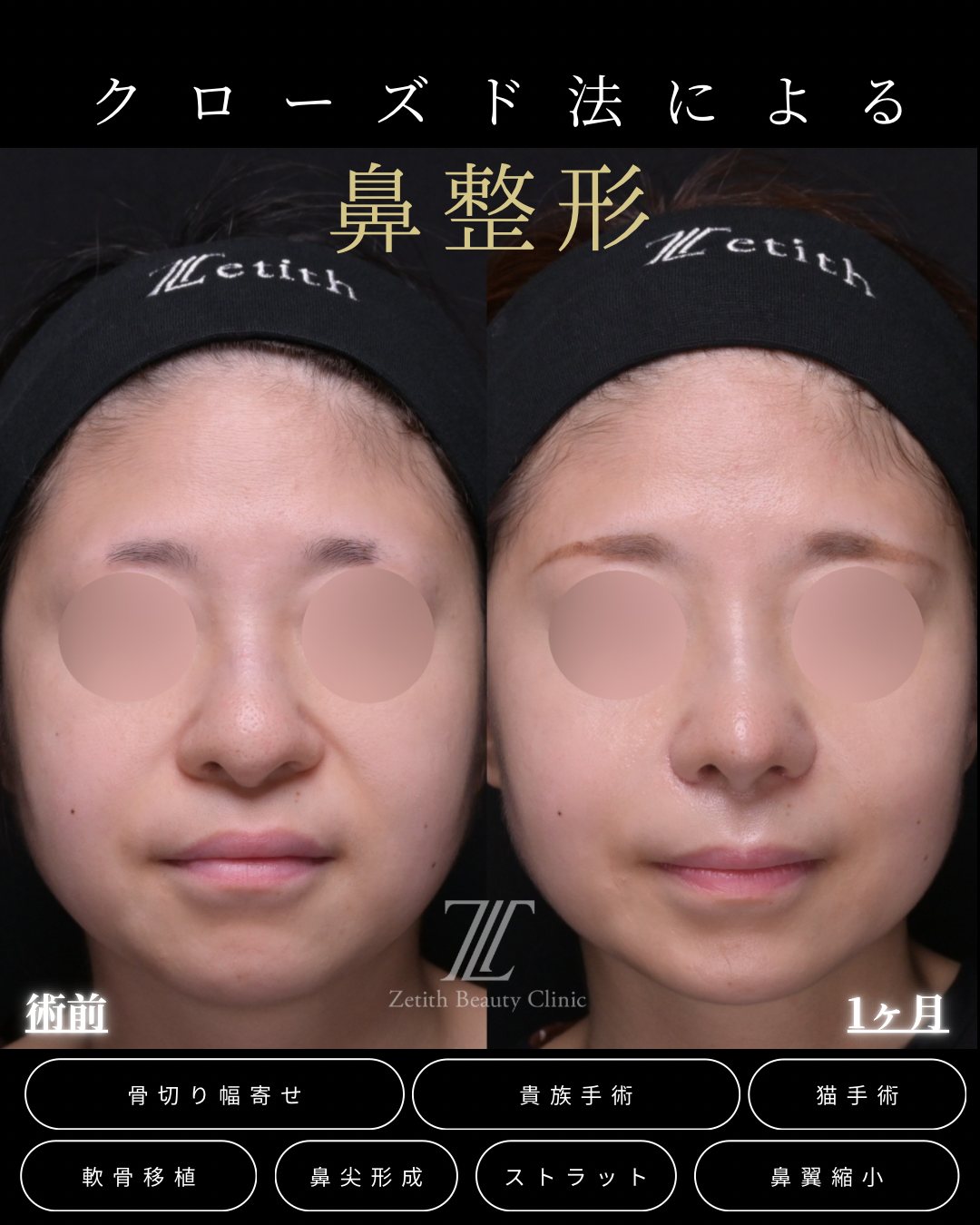
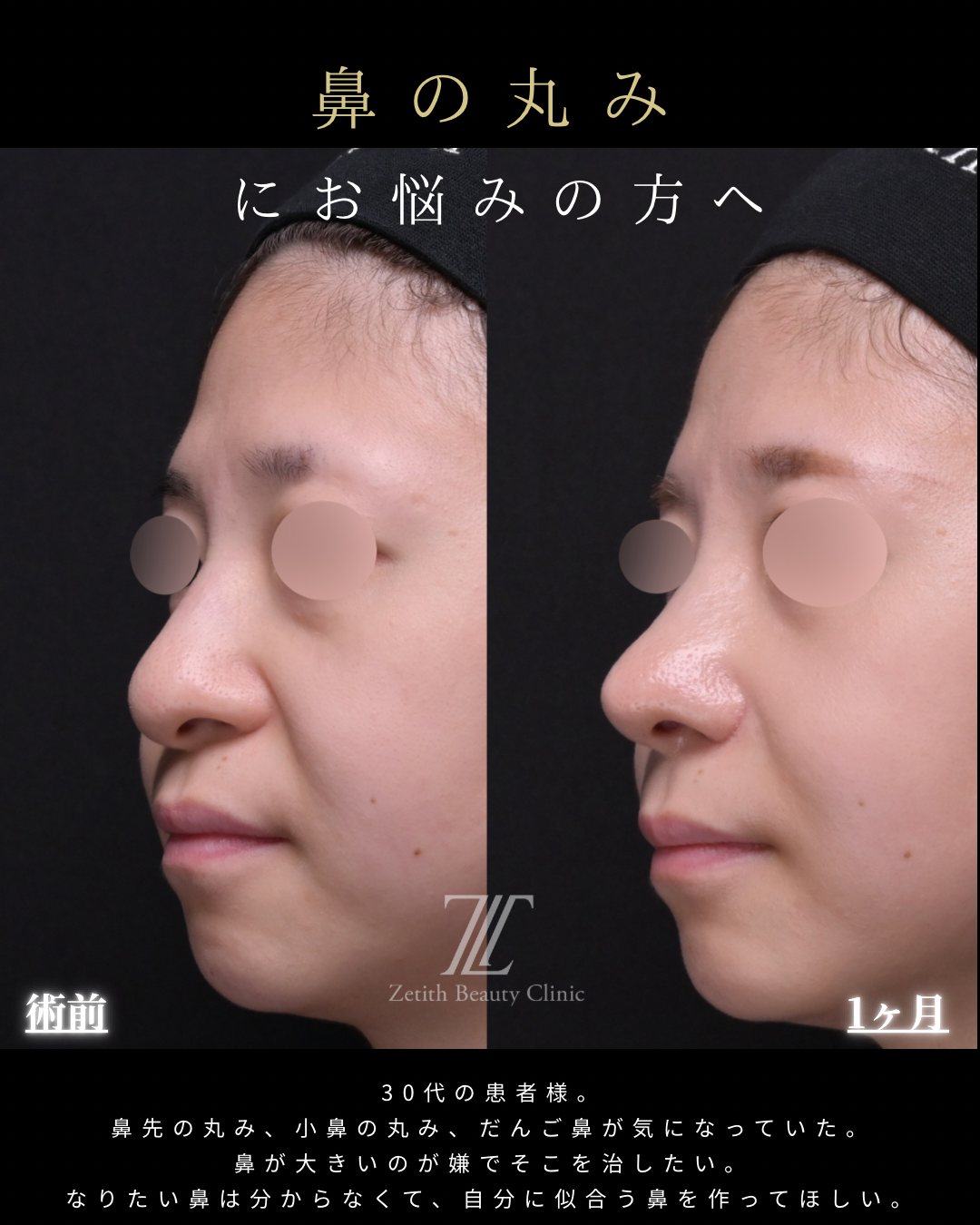
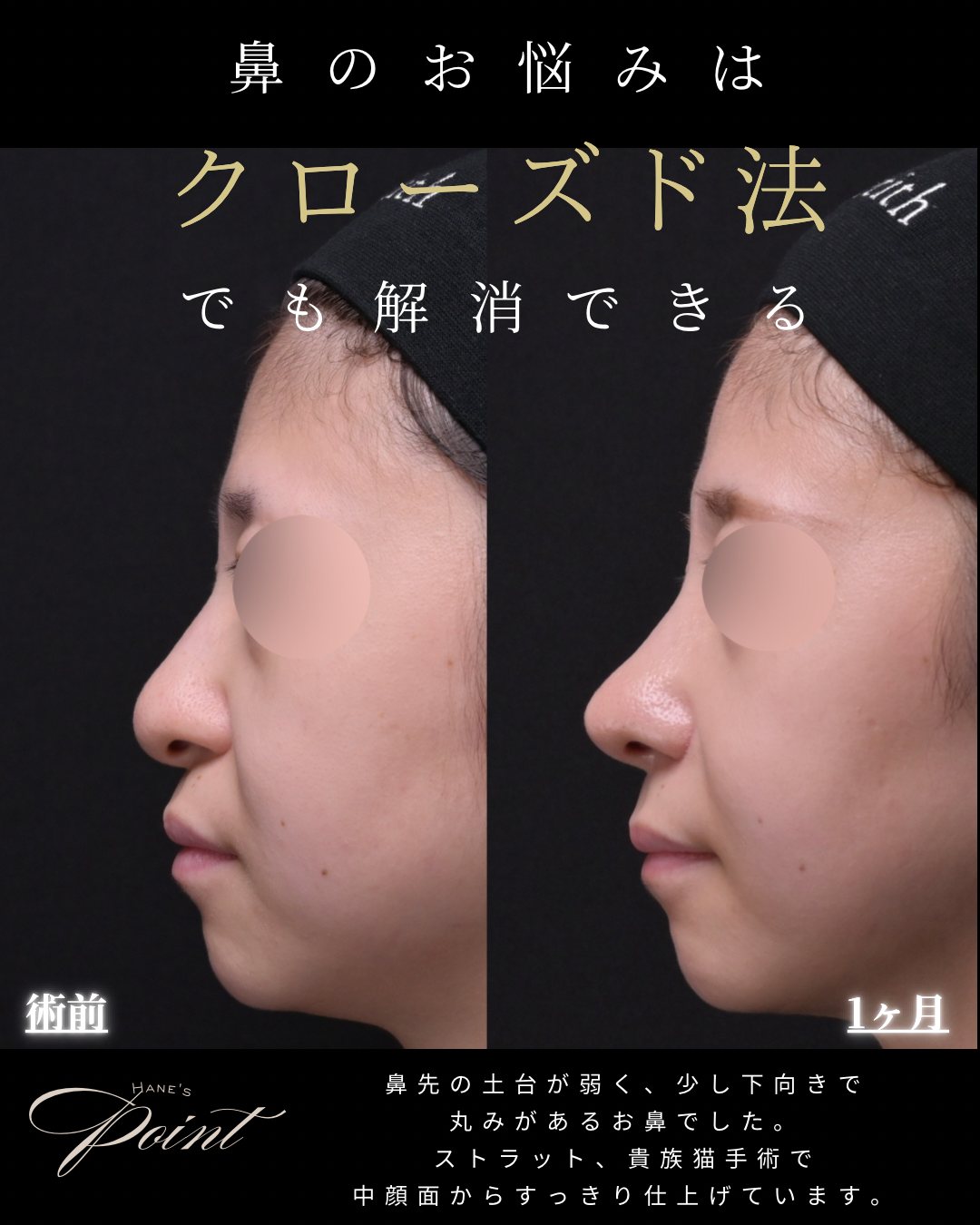
Case 2 | Rounded nose with a weak tip foundation (comprehensive rhinoplasty including alar base lift) / Closed technique
- Procedure
- Closed technique: osteotomy narrowing + tip plasty + cartilage graft + strut + alar base lift (nobility surgery) + lip lift (cat surgery) + alar reduction
- Price
- ¥980,000〜 (combination of multiple procedures)
- Main risks / side effects
- Swelling, bruising, asymmetry, infection, material displacement, individual variation in results, etc.
- Downtime
- About 1–2 weeks (photos taken 1 month post-op)
* Patient in her 30s. Multiple procedures performed in one session. Shown from three angles: front, oblique, and profile (published with consent; eye area edited to protect privacy). Results vary by individual, and risks and side effects may occur. Elective (non-insured) procedure.
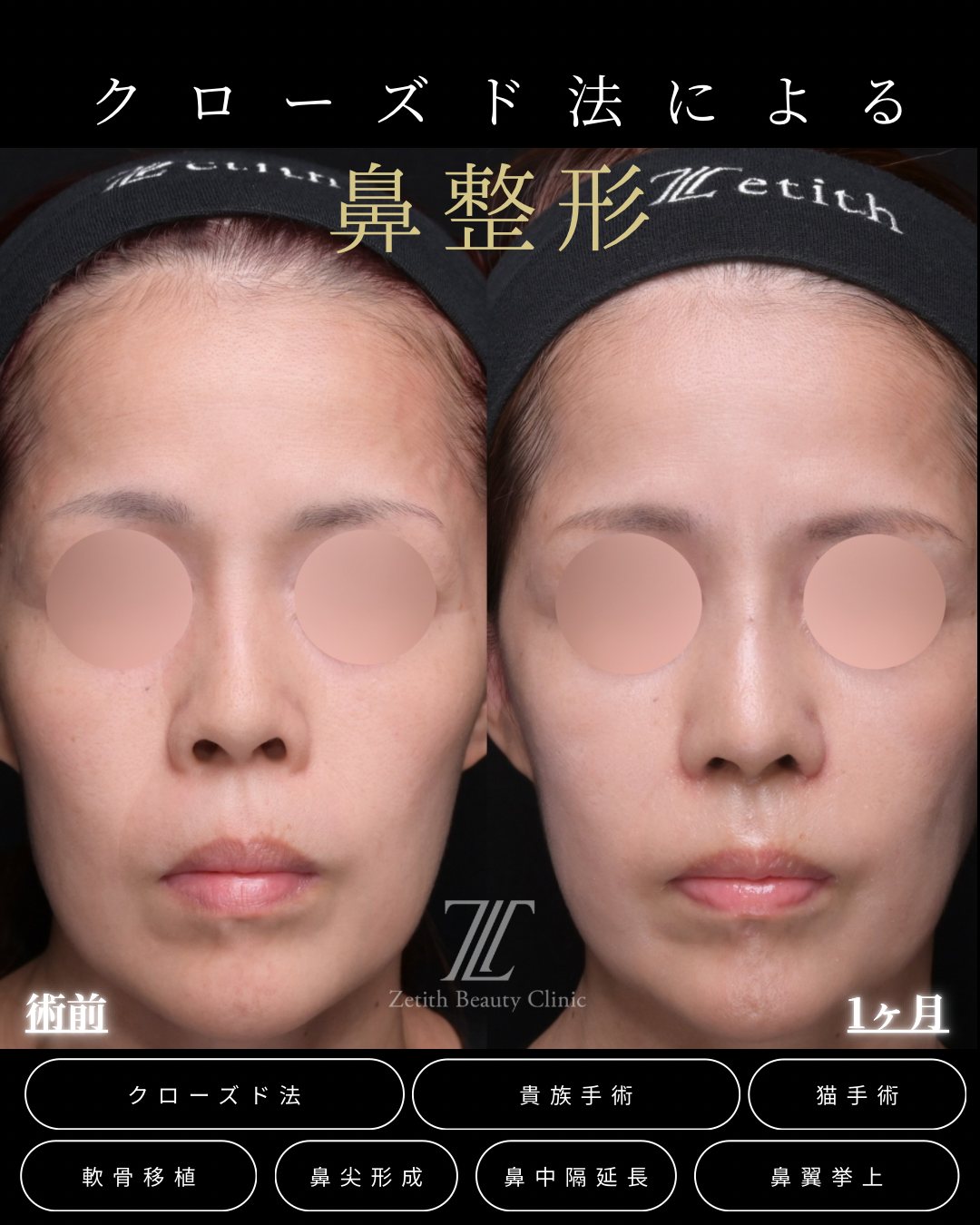
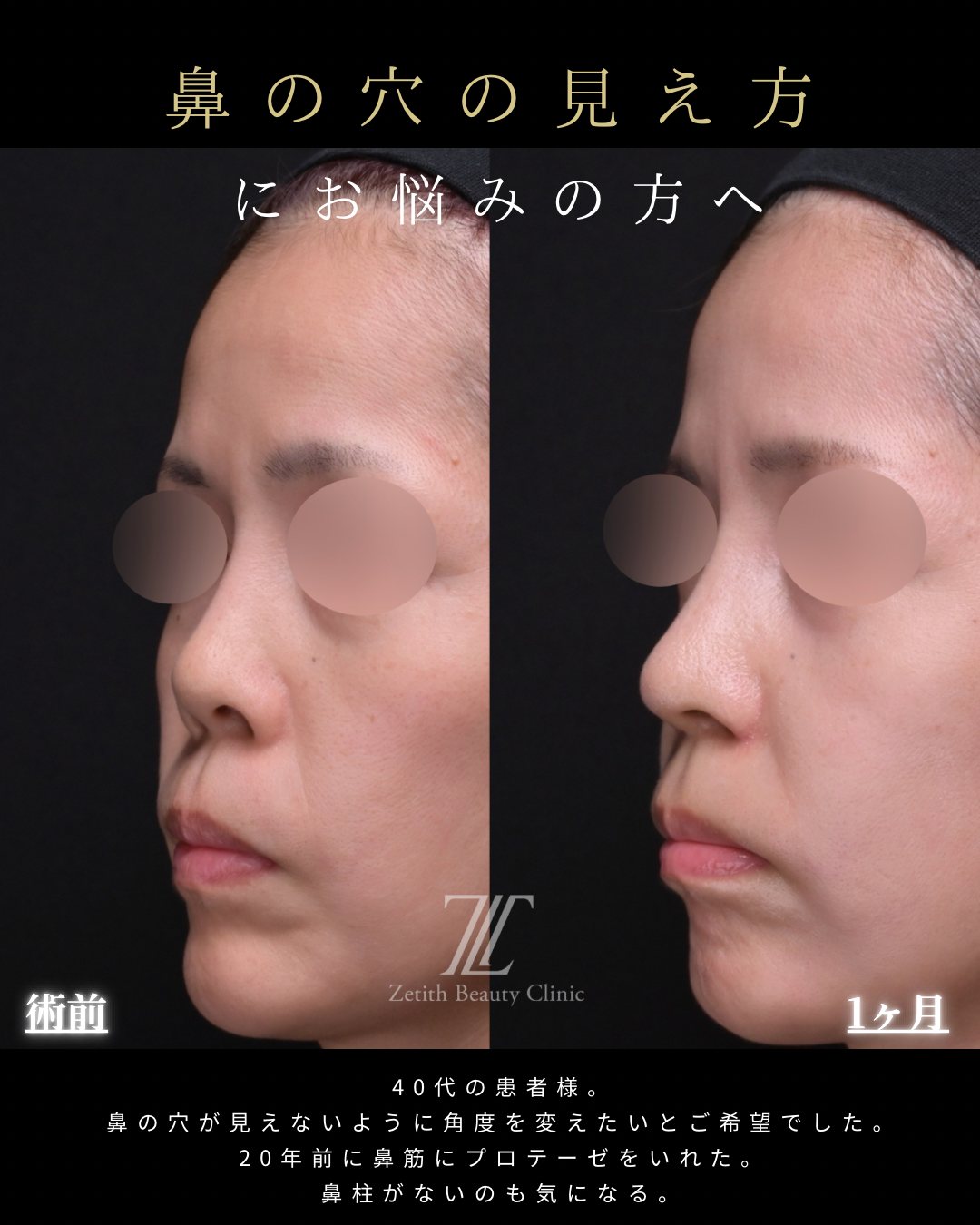
Case 3 | Tip-to-columella base and how the mouth area reads (closed technique with ear cartilage: septal extension + lip lift and more)
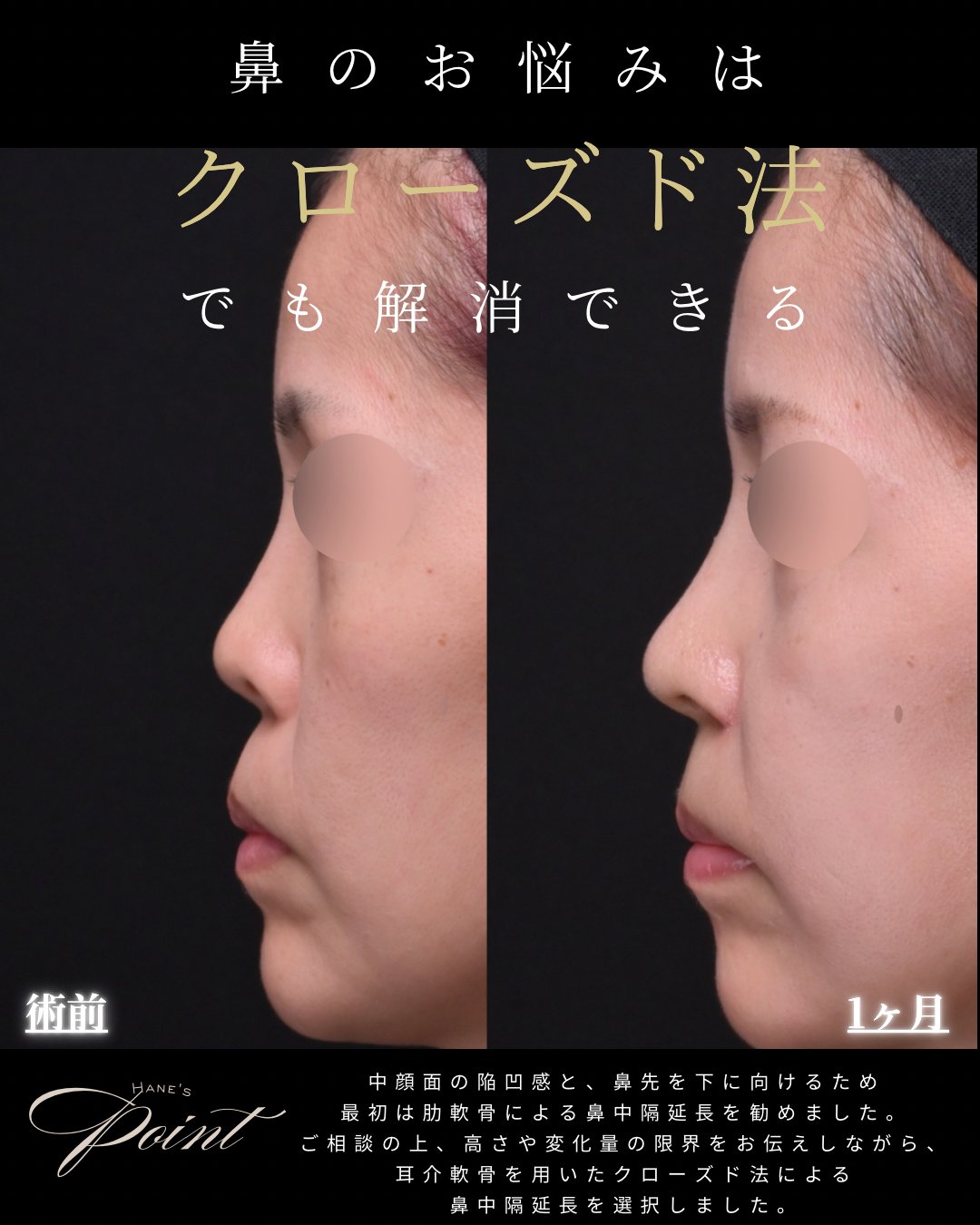
- Procedure
- Closed technique: septal extension (ear cartilage) + lip lift (cat surgery) + alar base lift (nobility surgery) + cartilage graft + tip plasty + alar lift
- Price
- ¥1,130,000〜 (combination of multiple procedures)
- Main risks / side effects
- Swelling, bruising, asymmetry, infection, tip stiffness, individual variation in results, etc.
- Downtime
- About 1–2 weeks (photos taken 1 month post-op)
* Patient in her 40s. Multiple procedures performed in one session. Front, oblique, and profile views shown (published with consent; eye area edited to protect privacy). Results vary by individual, and risks and side effects may occur. Elective (non-insured) procedure.
Case 4 | Low nasal bridge (closed technique: tip plasty + cartilage graft + strut + autologous augmentation / ear cartilage)
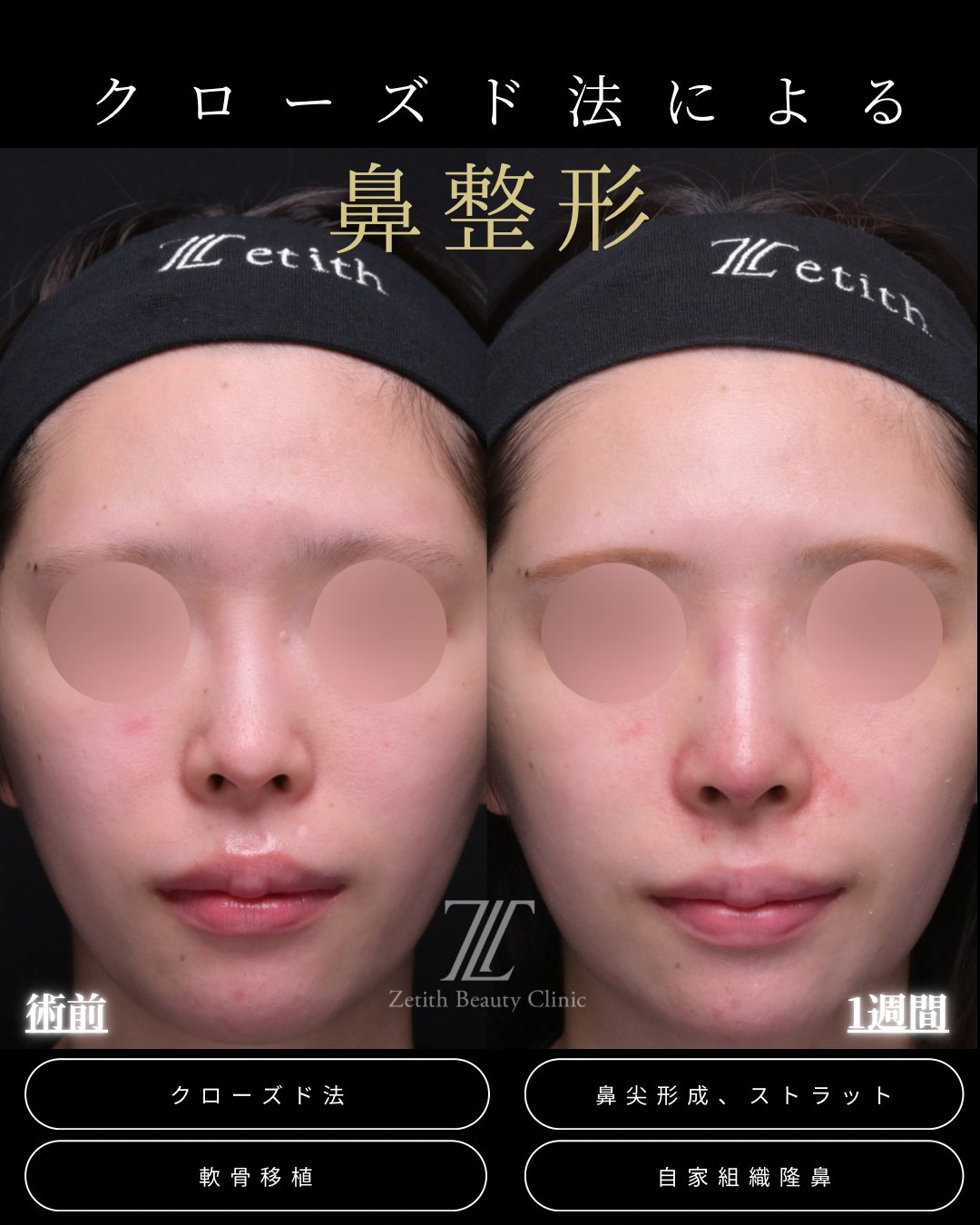
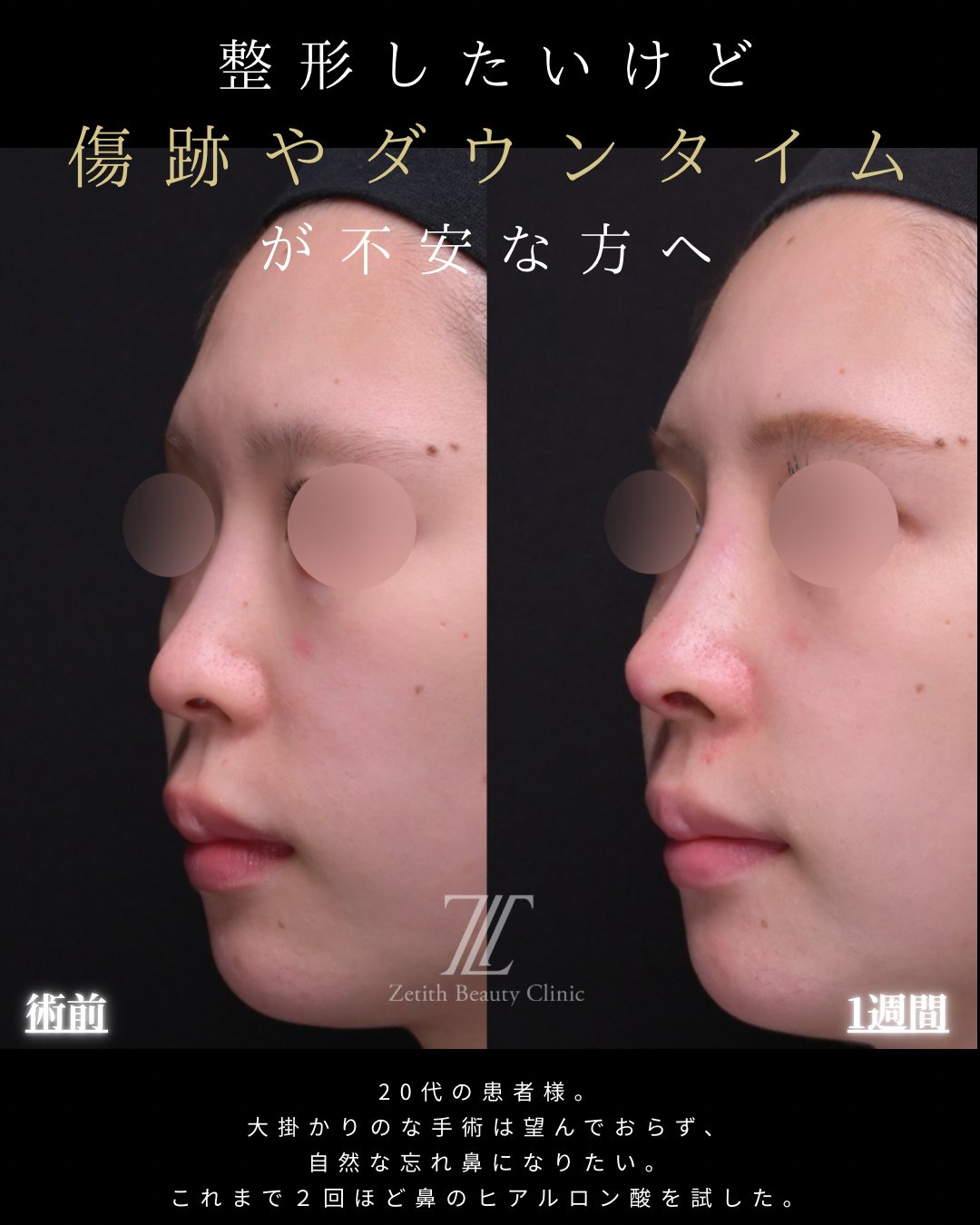
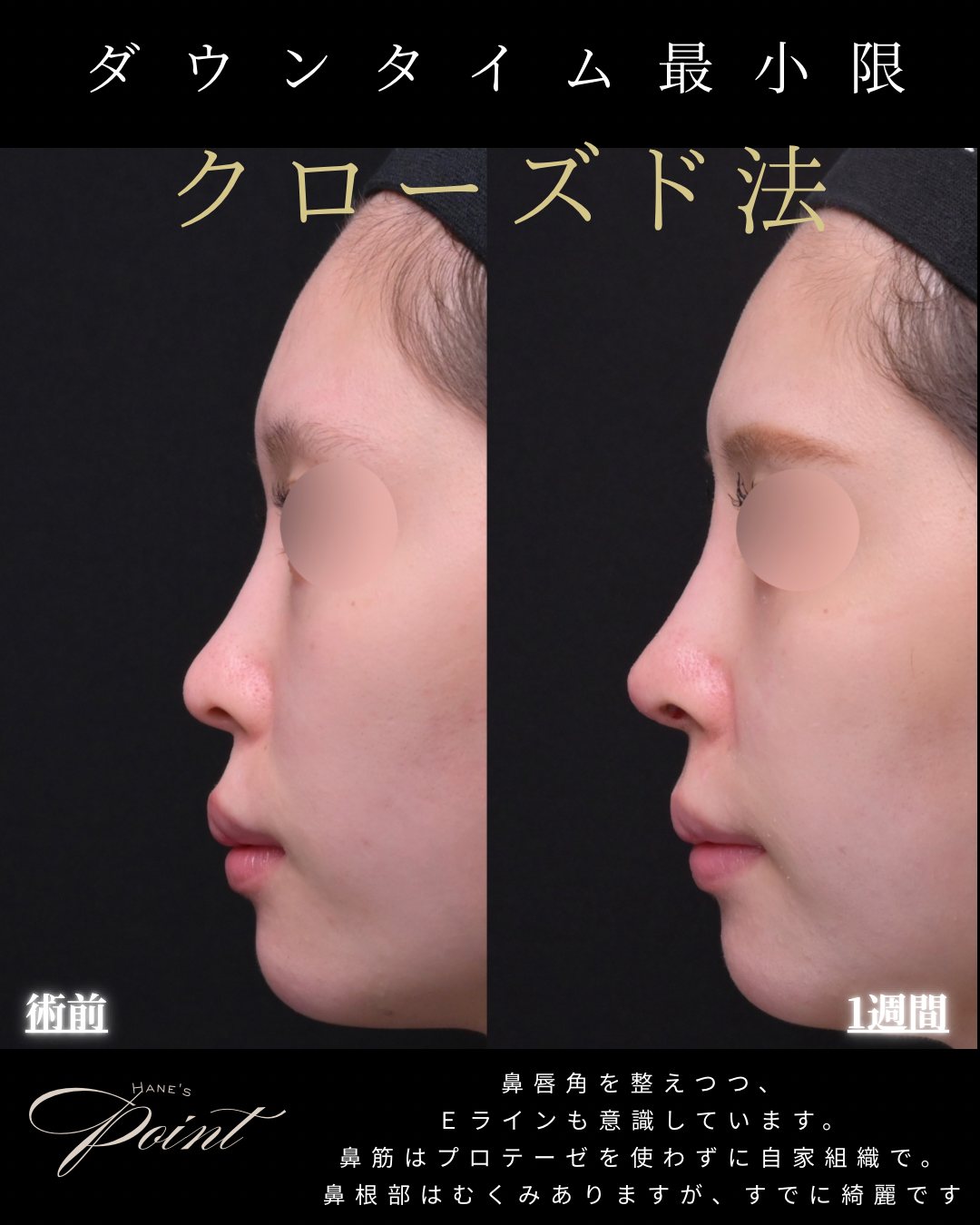
- Procedure
- Closed technique: tip plasty + cartilage graft + strut + autologous augmentation (ear cartilage)
- Price
- ¥780,000〜 (varies by combination)
- Main risks / side effects
- Swelling, bruising, asymmetry, infection, individual variation in results, etc.
- Downtime
- About 1–2 weeks (photos taken 1 week post-op)
* Patient in her 20s. Multiple procedures performed in one session, including autologous (ear cartilage) augmentation. Front, oblique, and profile views shown (published with consent; eye area edited to protect privacy). Results vary by individual, and risks and side effects may occur. Elective (non-insured) procedure.
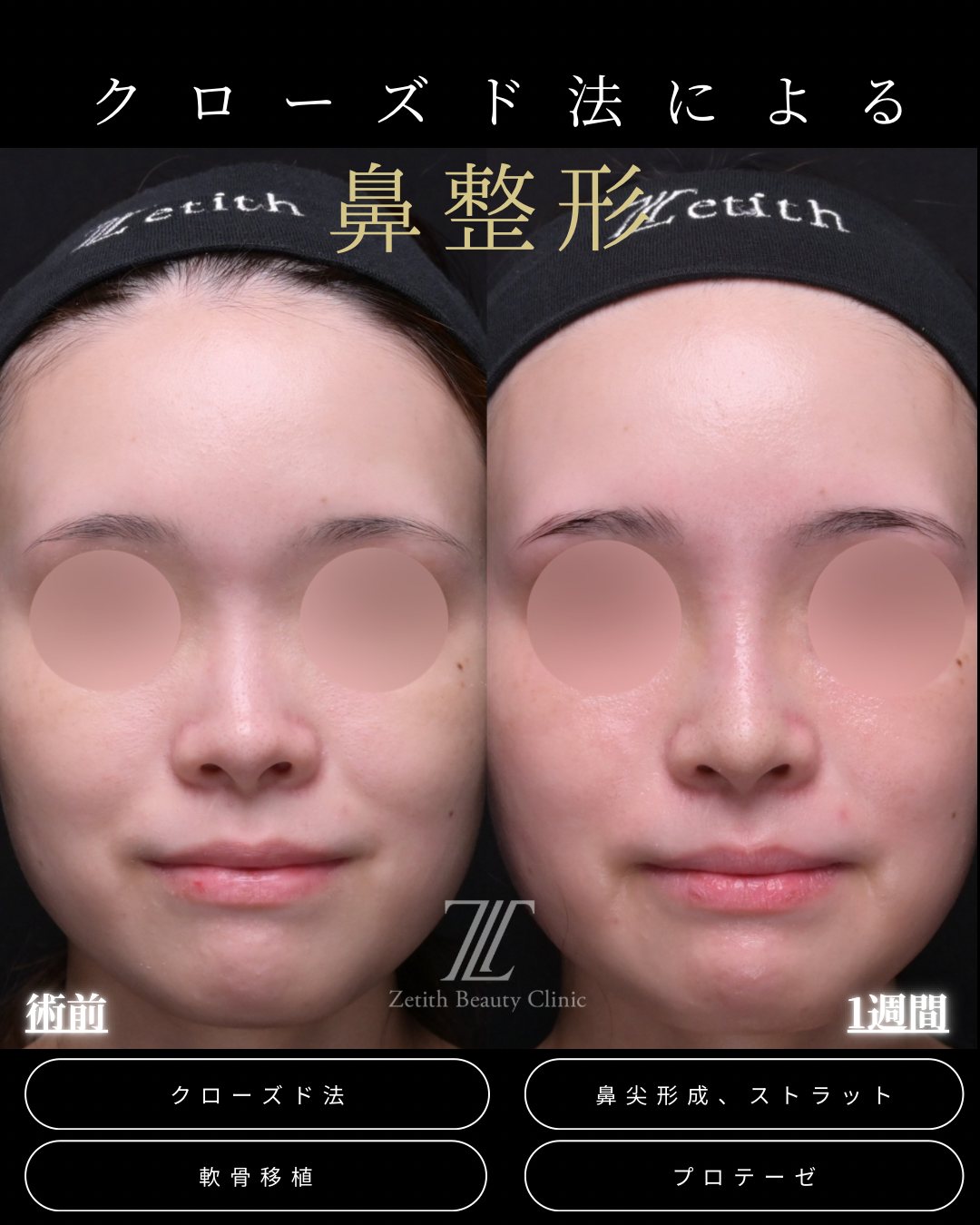
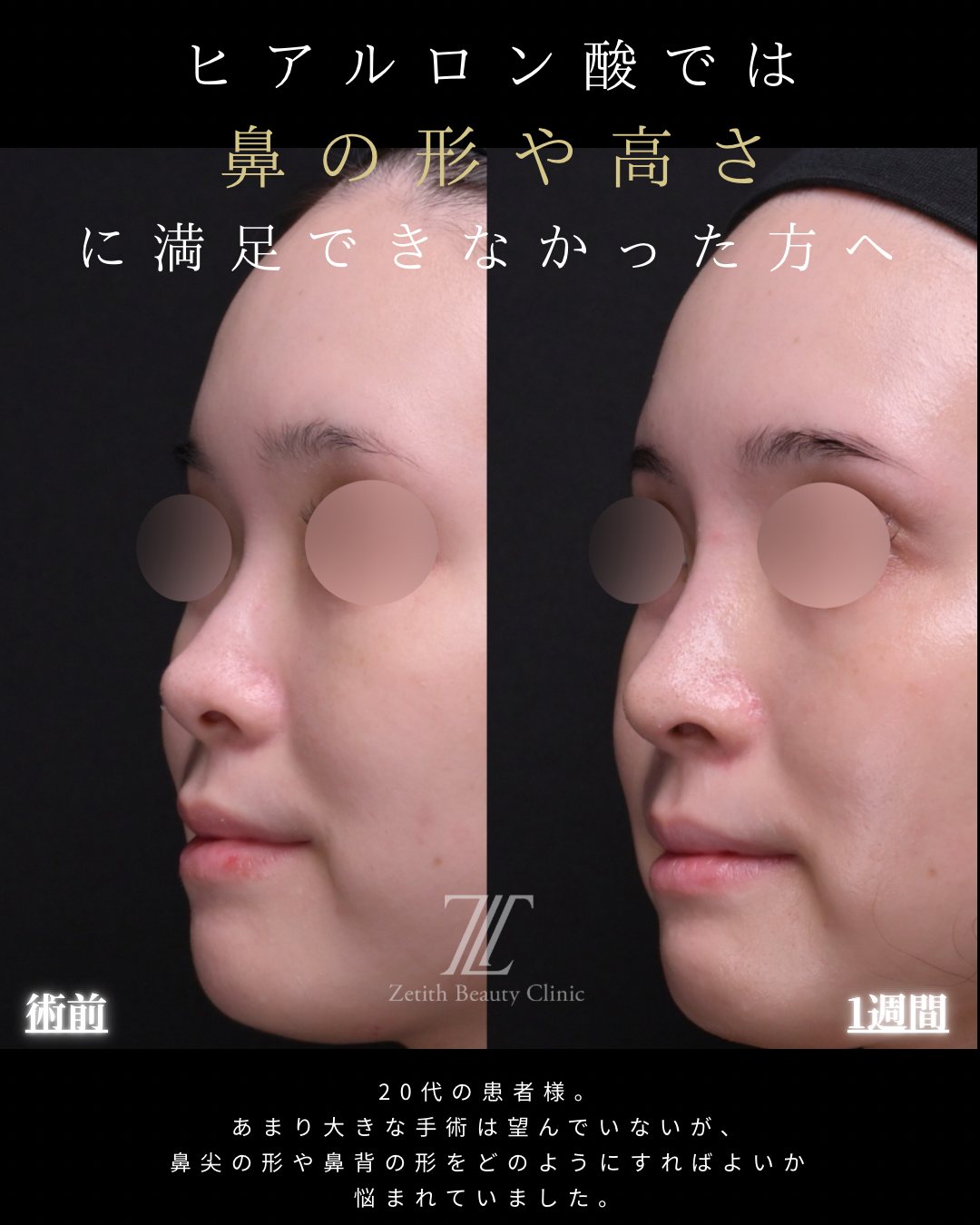
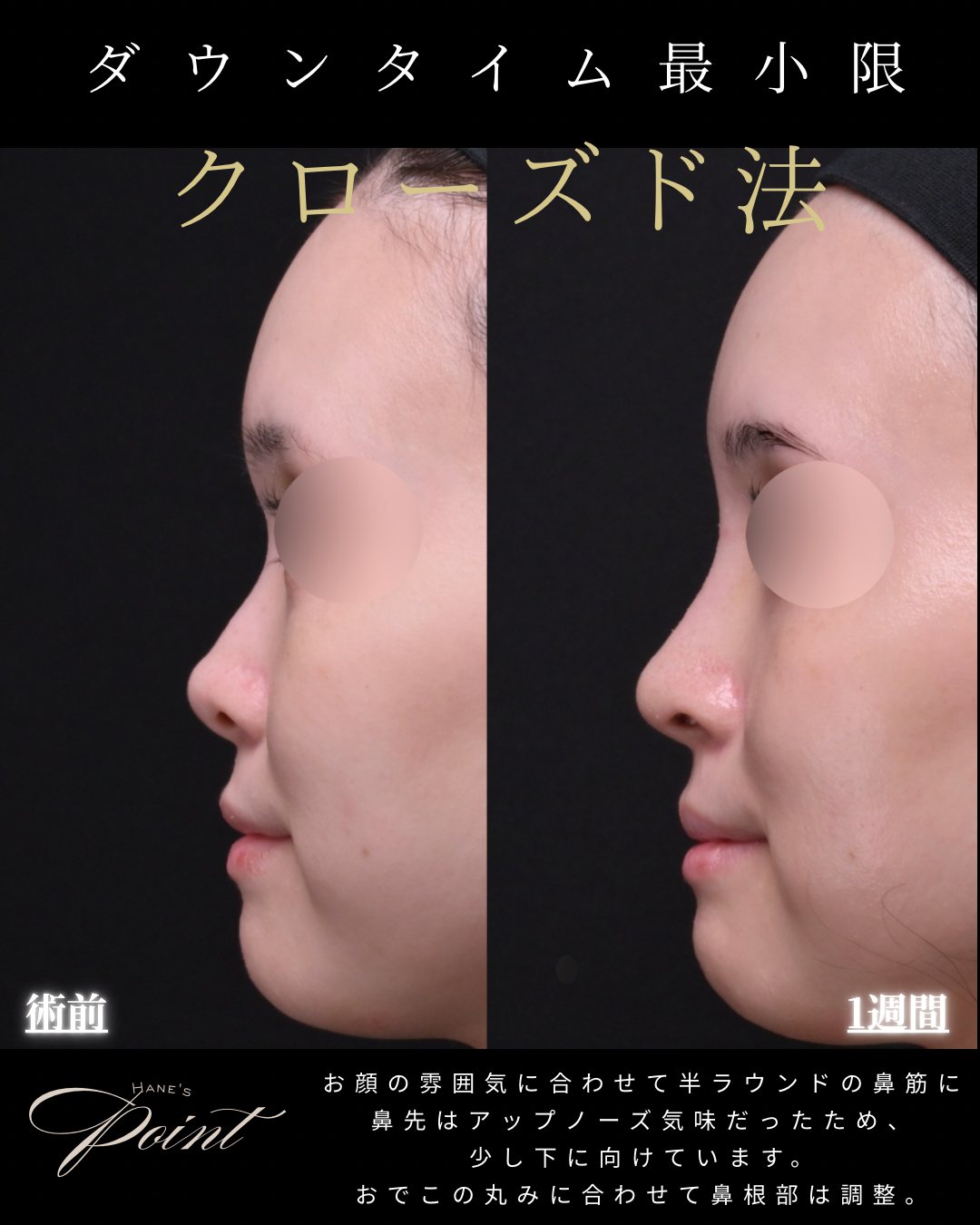
Case 5 | Unsatisfied with hyaluronic acid filler results (closed technique: tip plasty + strut + cartilage graft + implant augmentation)
- Procedure
- Closed technique: tip plasty + strut + cartilage graft + implant (bridge augmentation)
- Price
- ¥680,000〜 (varies by combination)
- Main risks / side effects
- Swelling, bruising, asymmetry, infection, implant displacement, individual variation in results, etc.
- Downtime
- About 1–2 weeks (photos taken 1 week post-op)
* Front, oblique, and profile views shown (published with consent; eye area edited to protect privacy). Results vary by individual, and risks and side effects may occur. Elective (non-insured) procedure.
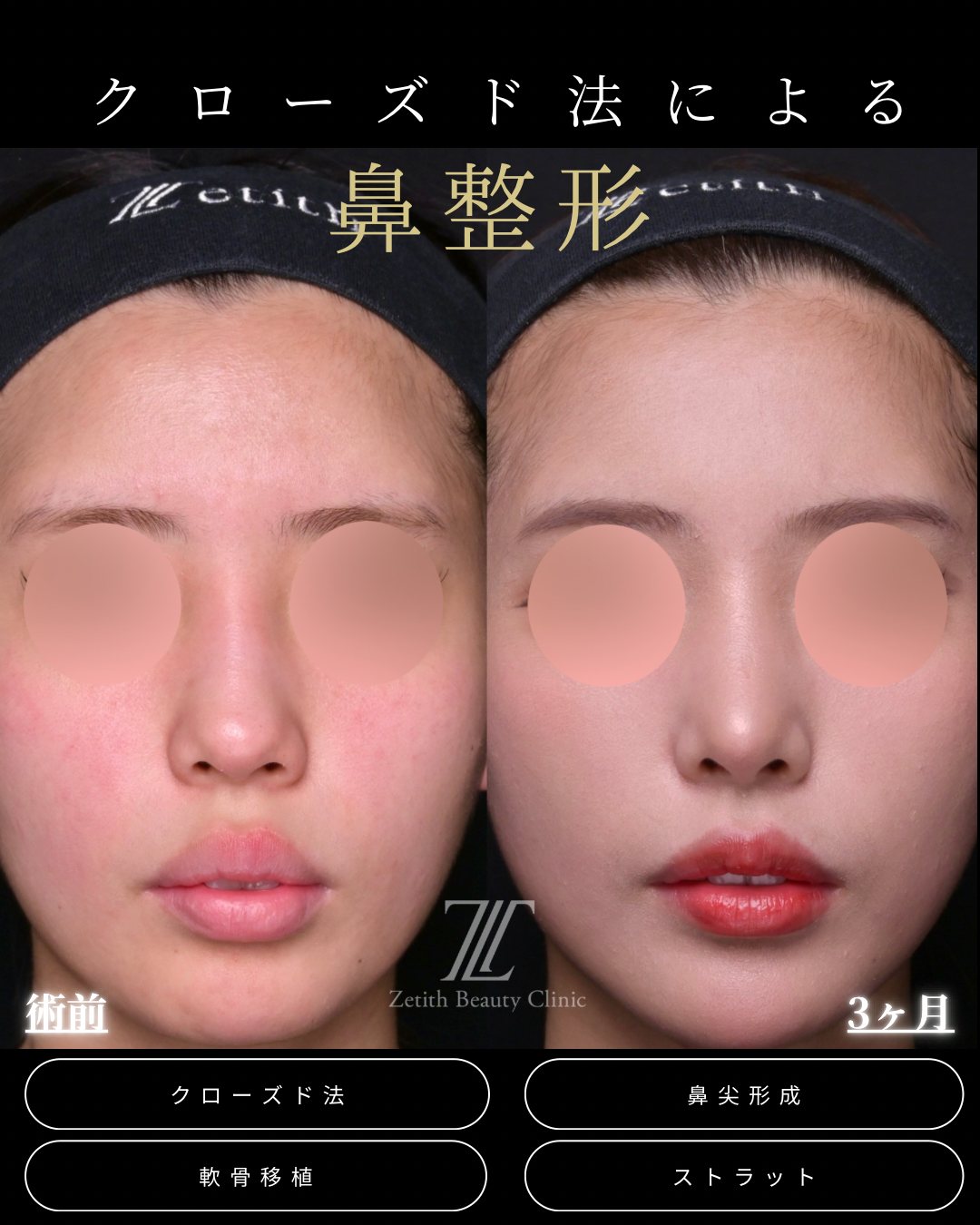
Case 6 | Bulbous tip / Closed technique: tip plasty + cartilage graft + strut
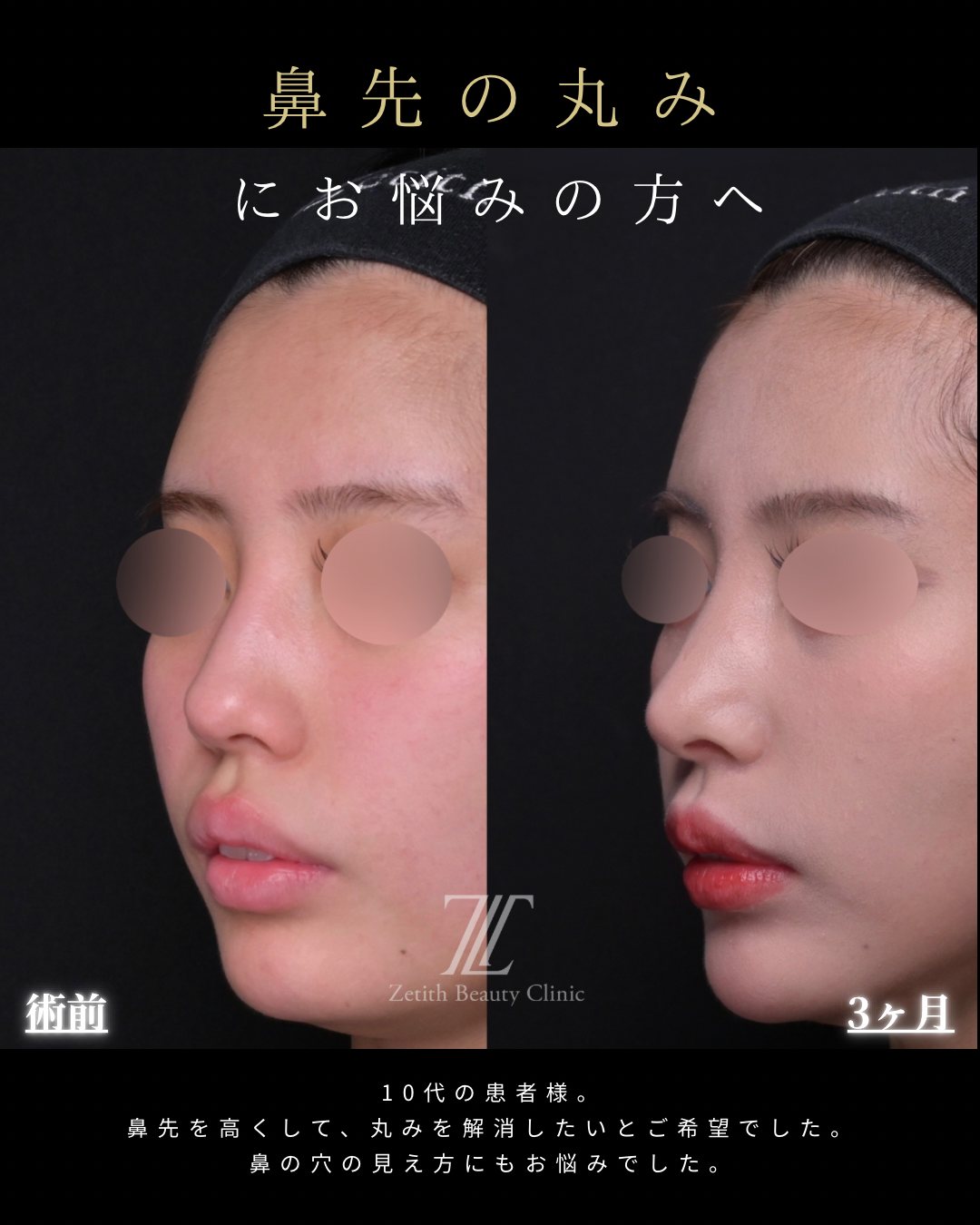
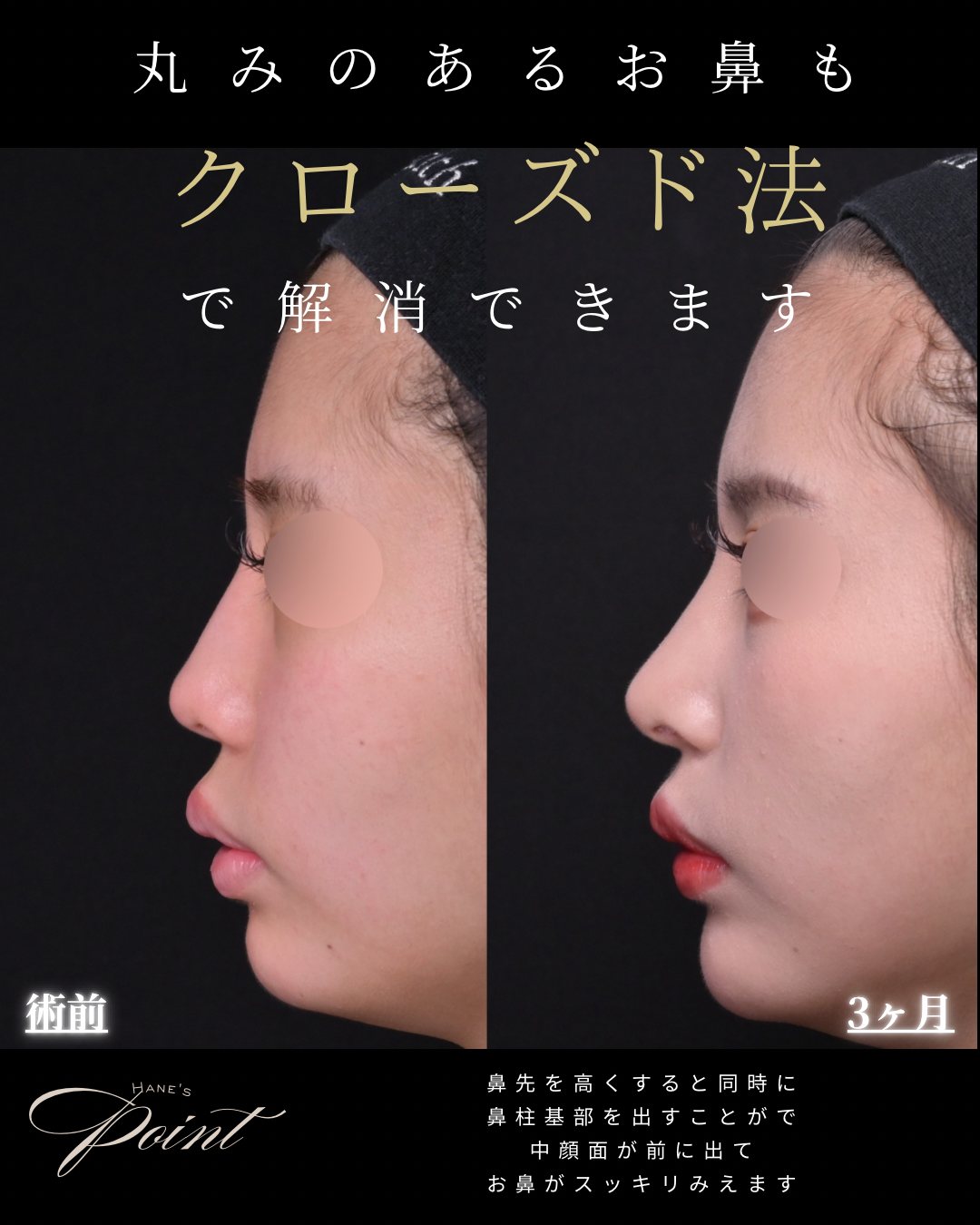
- Procedure
- Closed-technique tip plasty + cartilage graft + strut (bulbous tip refinement)
- Price
- ¥580,000〜 (varies by combination)
- Main risks / side effects
- Swelling, bruising, asymmetry, infection, individual variation in results, etc.
- Downtime
- About 1–2 weeks (photos taken 3 months post-op)
* Patient in her teens (published with parental consent; eye area edited to protect privacy). Shown from three angles: front, oblique, and profile. Results vary by individual, and risks and side effects may occur. Elective (non-insured) procedure.
Case 7 | Concerned about nostrils looking large (bridge height unchanged) / Alar reduction only (internal + external approach)
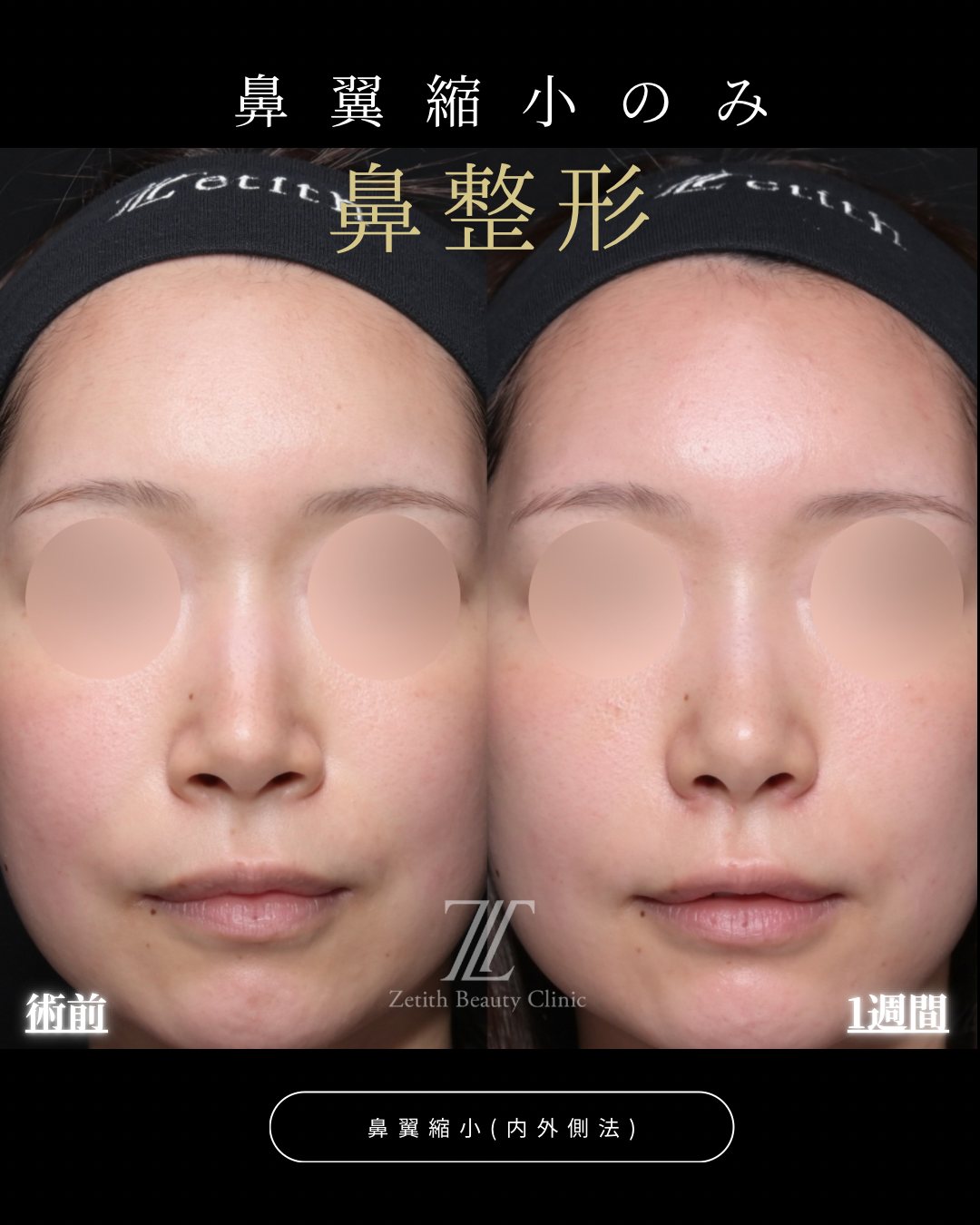
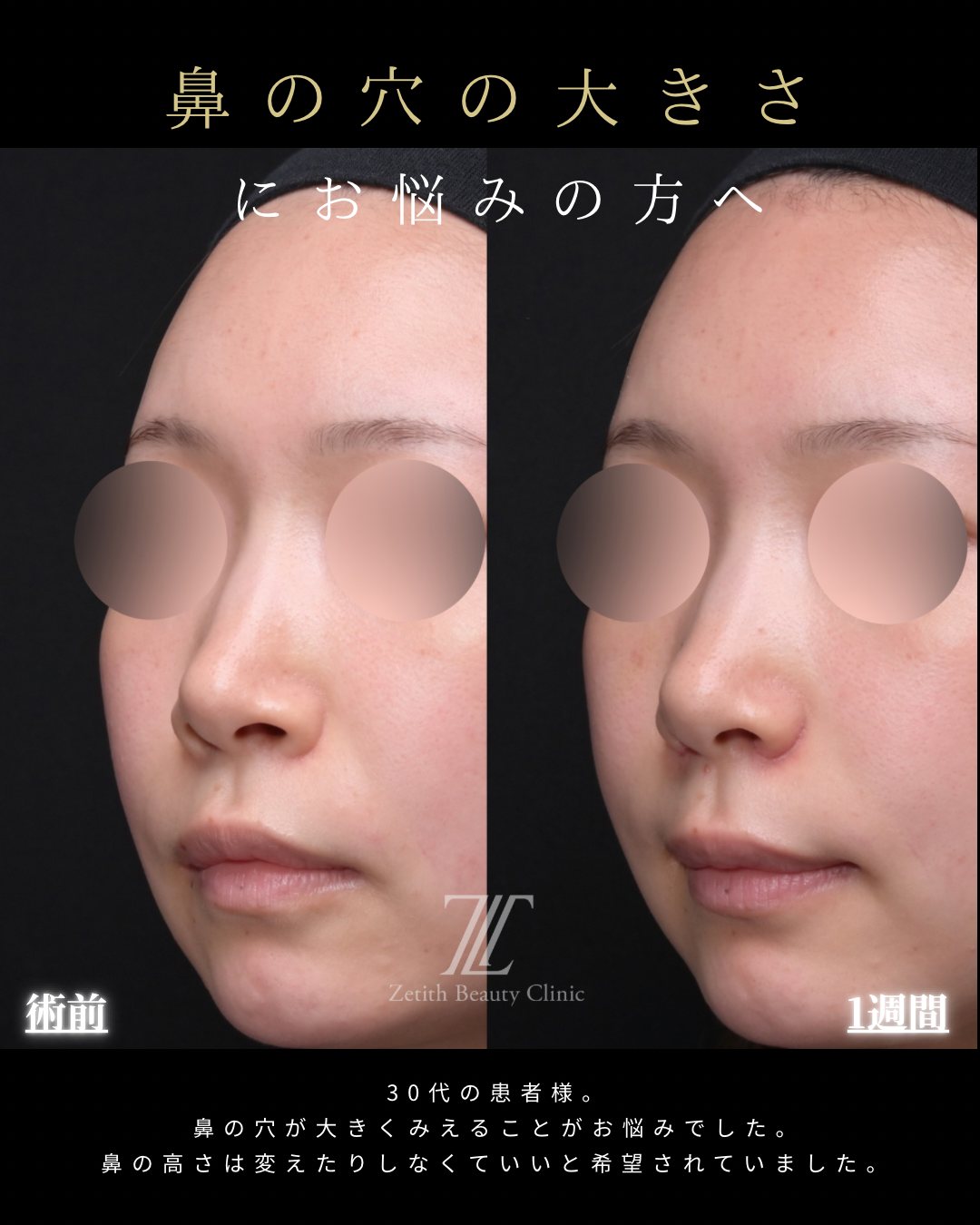
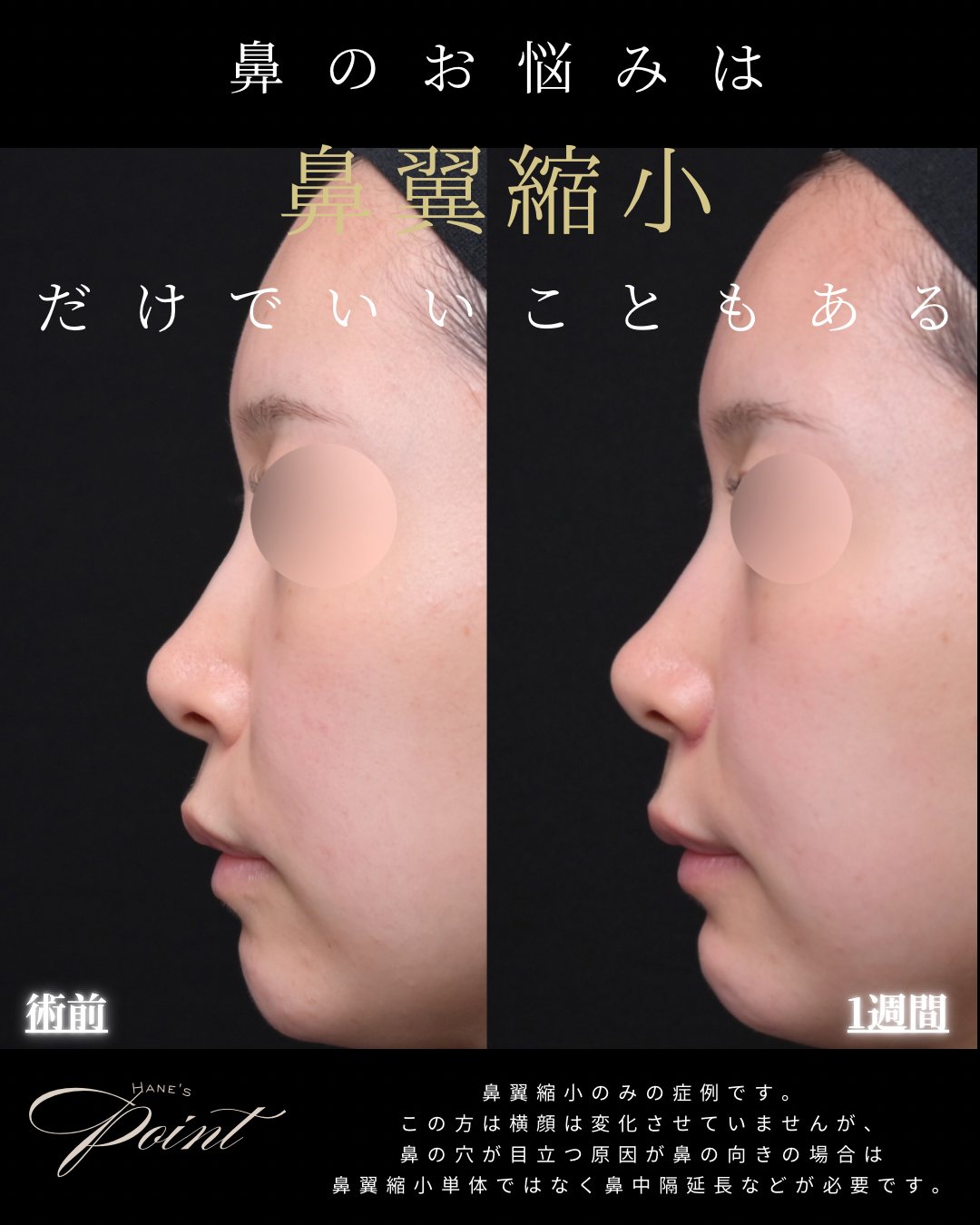
- Procedure
- Alar reduction only (internal + external approach) / bridge height and tip unchanged
- Price
- ¥308,000 (tax included / internal + external approach)
- Main risks / side effects
- Swelling, bruising, scarring, asymmetry, relapse, tightness, individual variation in results, etc.
- Downtime
- About 1–2 weeks (photos taken 1 week post-op)
* Patient in her 30s (published with consent; eye area edited to protect privacy). Front, oblique, and profile views shown. Results vary by individual, and risks and side effects may occur. Elective (non-insured) procedure.
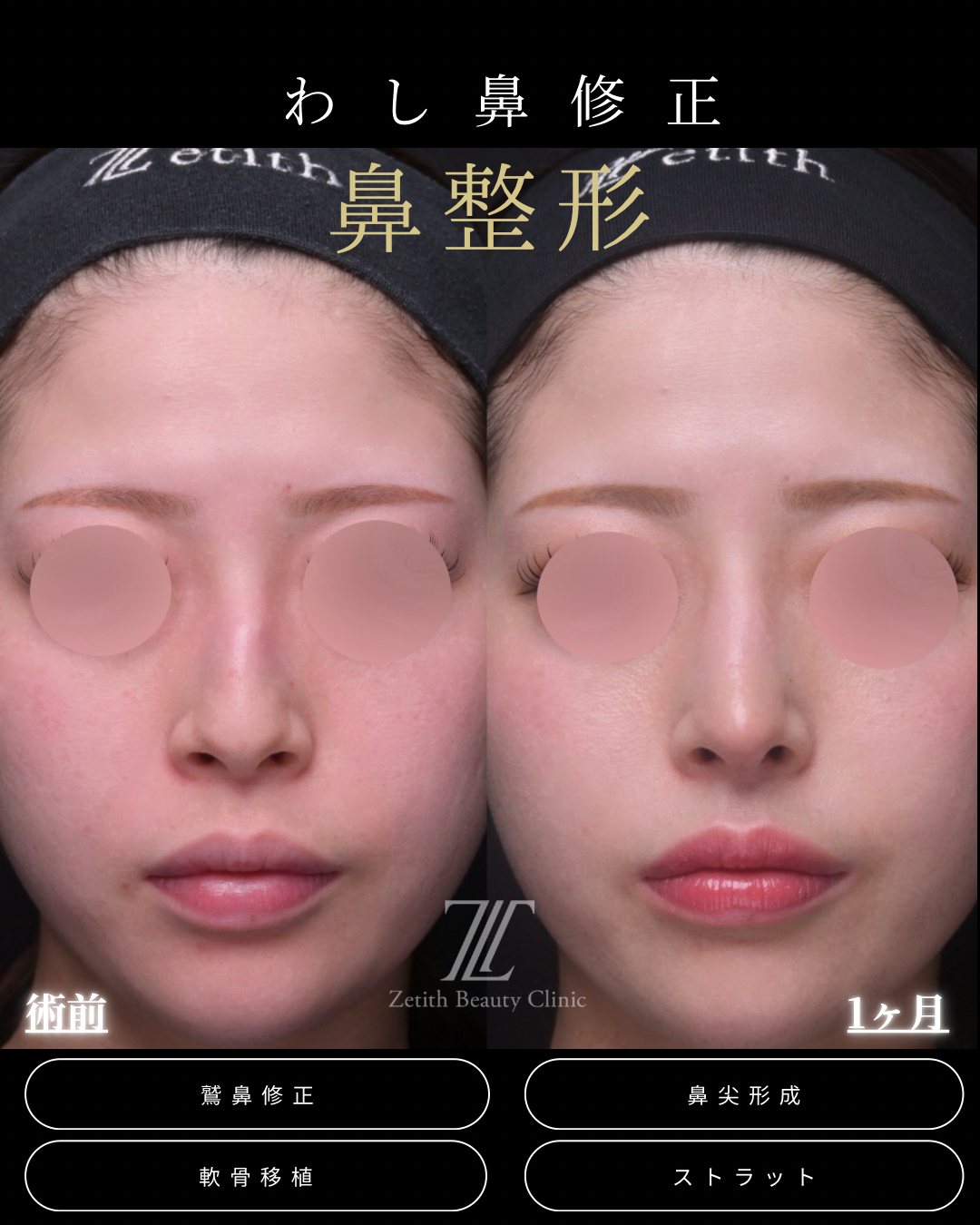
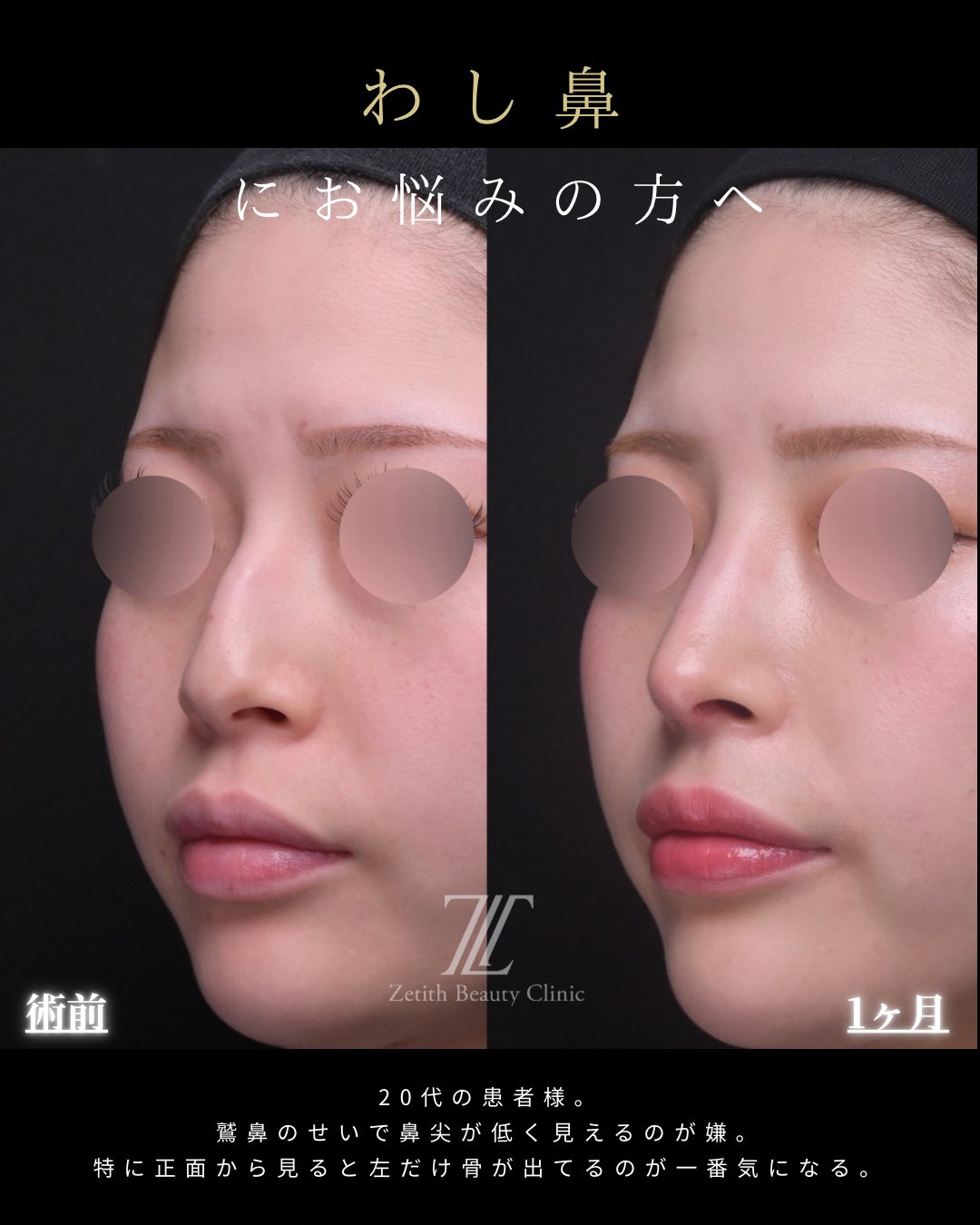
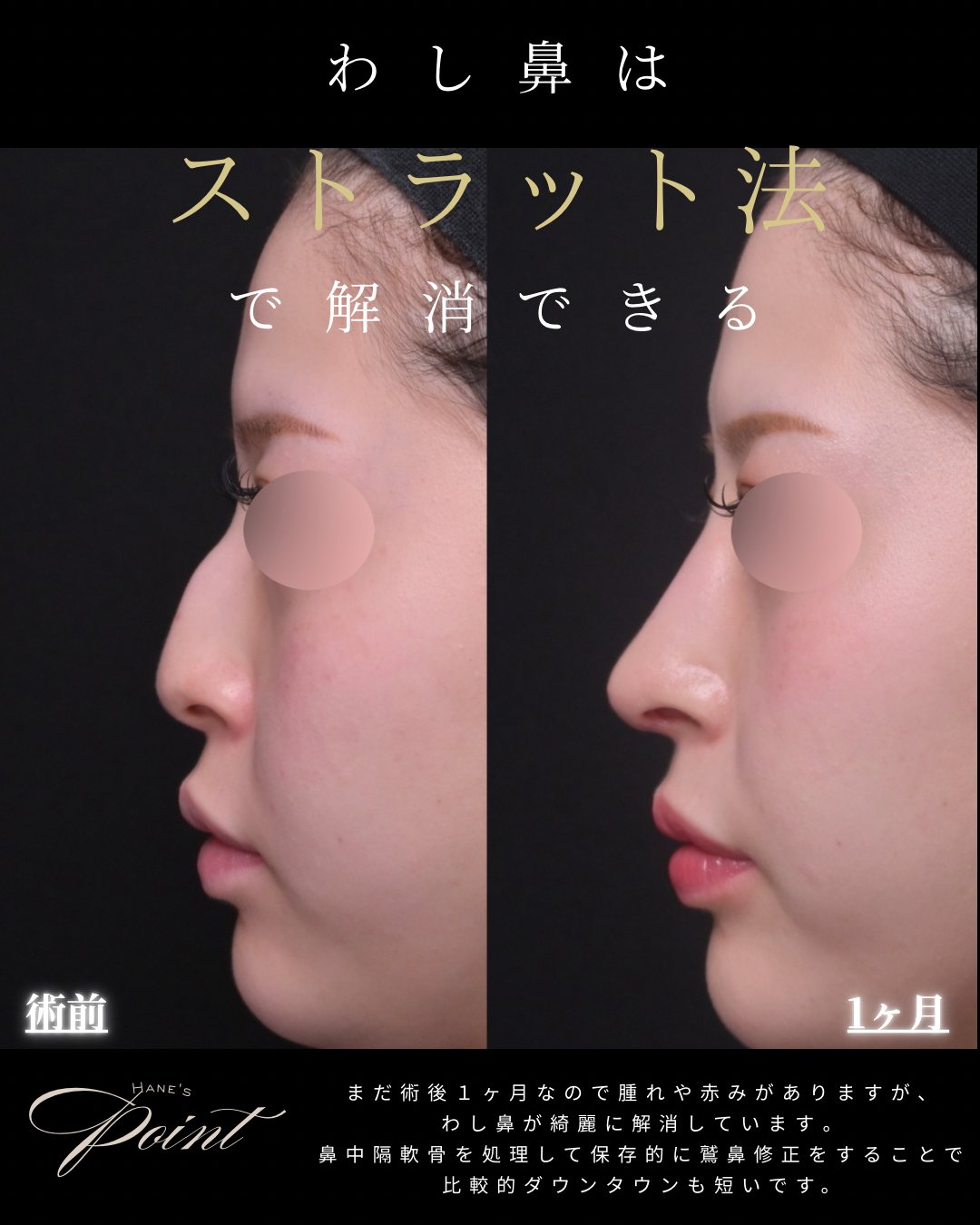
Case 8 | Dorsal hump making the tip look low / Hump reduction + tip plasty + cartilage graft + strut
- Procedure
- Open technique: hump reduction + tip plasty + cartilage graft + strut (conservative correction with septal cartilage work)
- Price
- ¥730,000
- Main risks / side effects
- Swelling, bruising, asymmetry, bridge irregularities, relapse, infection, individual variation in results, etc.
- Downtime
- About 1–2 weeks (photos taken 1 month post-op)
* Patient in her 20s, whose concerns were "my hump makes my tip look low" and "the bone protrudes when seen from the front" (published with consent; eye area edited to protect privacy). Front, oblique, and profile views shown. Results vary by individual, and risks and side effects may occur. Elective (non-insured) procedure.
Common Patterns Behind Regret
These are the situations that most often lead people to say "I wish I had researched more." If a clinic matches any of them, think carefully before proceeding.
Red Flags to Avoid
- Cases shown from only one angle (front only, profile only — you can't see the rest)
- The surgeon barely examines you and a counselor decides the procedure
- Choosing on price alone (total cost, extra fees, and breakdown are unclear)
- No explanation of risks or downtime / only the upside is discussed
- Deciding from social-media result images alone, without confirming what design your own nose actually needs
- Not confirming whether they can handle a revision if one is ever needed
What to Ask at Your Consultation
If you're unsure, ask these six questions at your consultation. How a clinic answers reveals its true attitude.
- Which technique does my nose need, and why? (Do they explain from the underlying cause?)
- What material will you use, and why that one? (Do their options extend to autologous tissue?)
- What is the total cost? What extra fees apply (anesthesia, tests, medication)?
- What are the downtime and main risks?
- Can you show me cases from every angle — front, oblique, and profile?
- If a revision ever becomes necessary, can you handle it?
Frequently Asked Questions
How can I tell a good clinic from a bad one?
The clearest indicators: do they publish cases from every angle (front, oblique, profile), does the operating surgeon examine and design personally, and do they explain the total price and the risks honestly? Use the 7 checkpoints in this article as your yardstick.
Will a doctor conduct my consultation?
At our clinic, the director examines you personally, handling everything from diagnosing the cause through design, material selection, and risk explanation. A counselor alone never decides your procedure.
What should I look for in before-and-after photos?
Check whether all angles — front, oblique, and profile — are published. The nose is three-dimensional, so a single angle (profile only, for example) tells you nothing about the result from other viewpoints. Clinics showing every direction give you far more to judge by.
Are cheap clinics dangerous?
Low prices aren't inherently bad, but judge by whether the total cost, extra fees, and breakdown are clear, and whether risks and revisions are explained. It's safer not to make price your only criterion.
I'm unhappy with a nose job I had at another clinic. Can I consult you?
Yes — we also handle revision of surgeries performed elsewhere. The approach varies greatly with your condition, so please let us examine you first. For more, see the revision section of our technique guide.
AI-аас үргэлжлүүлэн асуух асуултууд
Rhinoplasty in Fukuoka, Without the Regret
From diagnosing the underlying cause through design, material selection, and risk explanation, our director explains everything to you personally — and shows you cases from every angle, front, oblique, and profile, on the spot. Start with a free consultation to find out what your nose actually needs.
* This article is intended to provide general medical information and does not guarantee results. Suitability, costs, and risks of treatment are determined individually through examination. Results vary by individual. Rhinoplasty is an elective procedure not covered by insurance. Case photos are published with patient consent, with the eye area edited to protect privacy.