
Key Takeaways
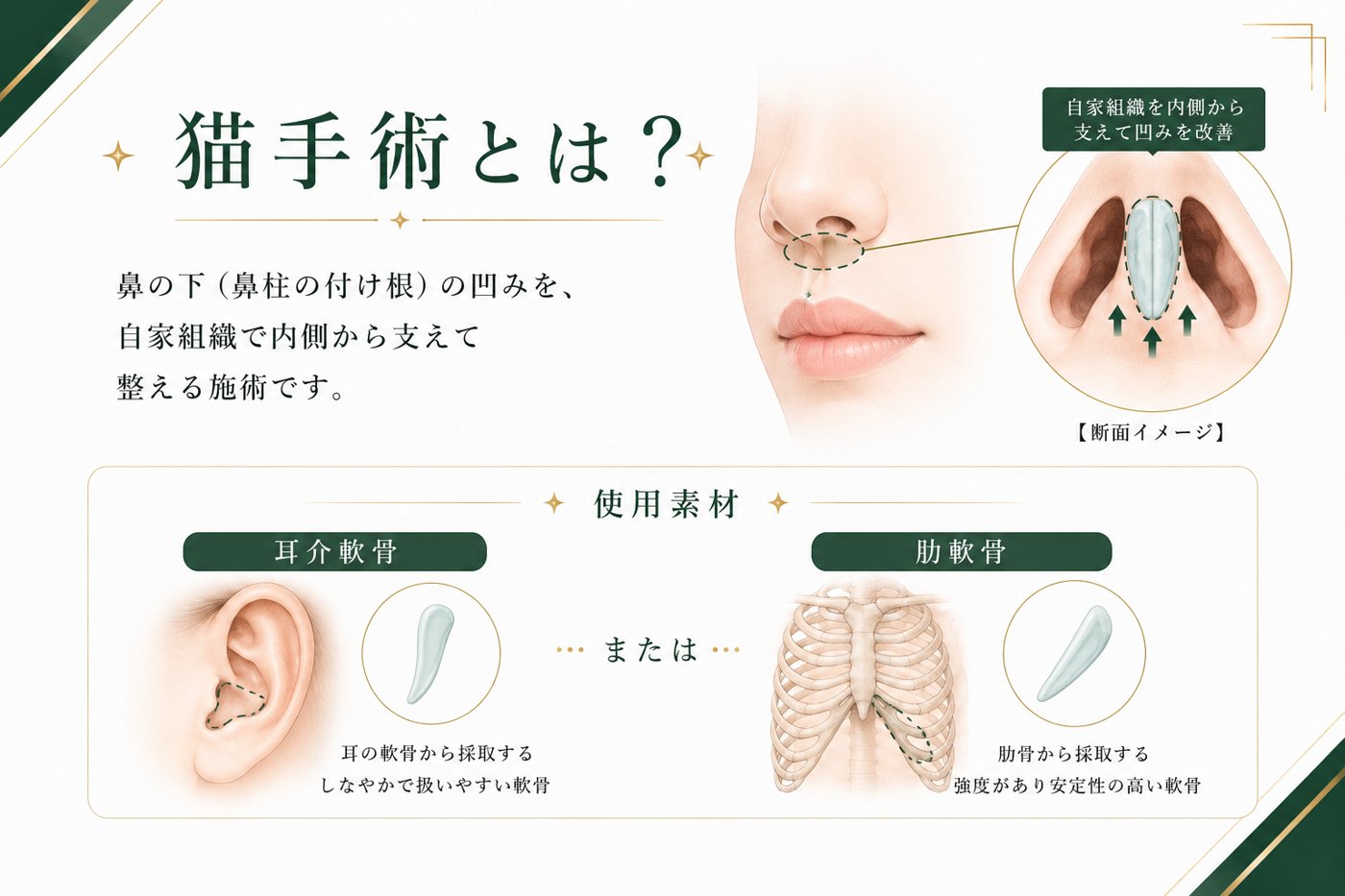
- The Neko procedure is a rhinoplasty that places your own cartilage into the recessed base of the columella, supporting the foundation from within and bringing it forward
- For those who want to soften a nasal tip that seems to jut out on its own, or a mouth area that looks pushed forward (a protruding-mouth impression)
- Performed together with septal extension, using only your own cartilage (autologous tissue: ear or rib cartilage). No implants are used
- It targets a different area from the Kizoku procedure (base of the nostril wings), so their roles are distinct; in some cases the two are combined
- The cost is included in septal extension (there is no standalone fee for the Neko procedure)
What Is the Neko Procedure?
Changes you can expect
- Softening a protruding-mouth impression: brings the recessed columellar base forward, easing the look of a mouth area that seems pushed forward
- Profile balance: refines the line connecting the nasal tip, the area under the nose, and the mouth
Who It Suits (Indications)
Whether the Neko procedure suits you comes down largely to whether the area under your nose (the base of the columella) is recessed. The following concerns tend to be good candidates (suitability is determined by examination, and results vary by individual).
1. You are already considering septal extension
The Neko procedure is performed together with septal extension as a rule. It suits those who, while refining the tip forward and downward, want the area from under the nose to the mouth designed as one continuous line. For septal extension itself, see our article on septal extension.
2. A recessed columellar base that makes the mouth look pushed forward
By building a foundation at the columellar base and bringing it forward, it becomes an option for those who want to soften the impression of a protruding mouth area.
3. You want to refine the profile (the line from tip to mouth)
Refining the tip alone can leave the connection from under the nose to the mouth feeling unfinished. Adding the Neko procedure makes it easier to design the flow of the profile as a single line.
Materials (Ear Cartilage and Rib Cartilage)
The Neko procedure uses only autologous tissue (your own cartilage). No implants such as silicone prostheses are used. The material is ear or rib cartilage, chosen according to the amount needed and the techniques performed alongside.
| Item | Ear cartilage | Rib cartilage |
|---|---|---|
| Harvest site | Behind the ear (your own cartilage) | Costal cartilage (your own cartilage) |
| Volume / strength | Soft; suited to fine adjustments | Ample volume; provides firm support |
| Additional scar | Small scar behind the ear (hard to notice) | A few centimeters on the chest |
| Best suited for | Smaller amounts needed; preferring the ear as donor site | Firmer correction; rhinoplasty that already uses rib cartilage |
| Main cautions | Limited amount can be harvested | Donor-site burden (chest scar, pain, etc.) |
Our Neko Procedure
We perform the Neko procedure together with septal extension, using the closed technique, which leaves no scars on the skin surface. During septal extension, autologous tissue is sutured to your own septal cartilage to build a foundation at the columellar base, supporting it from within and bringing it forward.
The Neko procedure is not a standalone operation — as a rule it is designed as part of septal extension. We decide how to shape the tip forward and downward, and then how far to refine the area from under the nose to the mouth, reviewing both the front and profile views.
If you want to further refine the balance of the midface and mouth area, we may combine it with the Kizoku procedure (alar base augmentation). How far to go, and with which material, is proposed at counseling.
How we think about design
Case Photos (Front, Oblique, Profile)
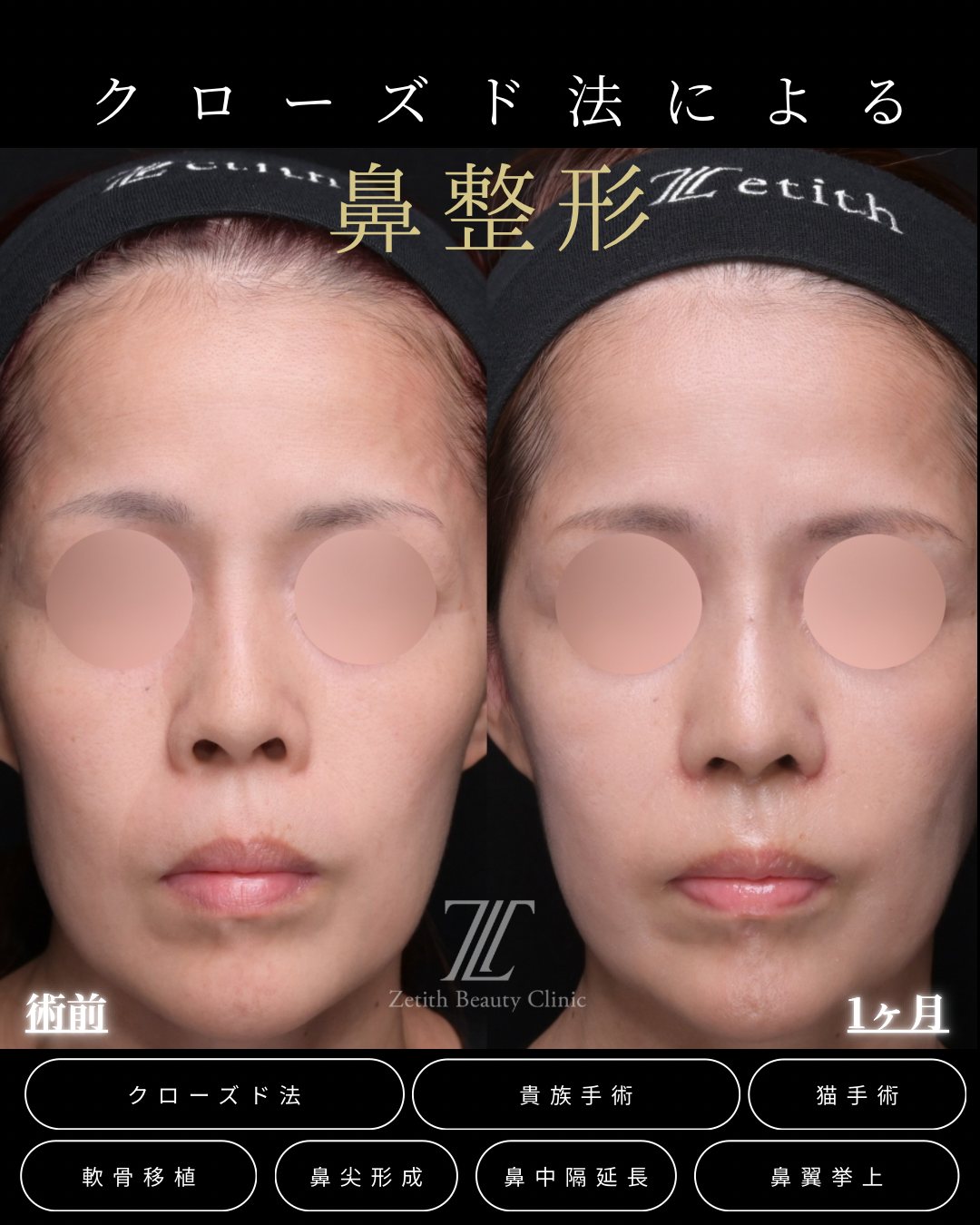
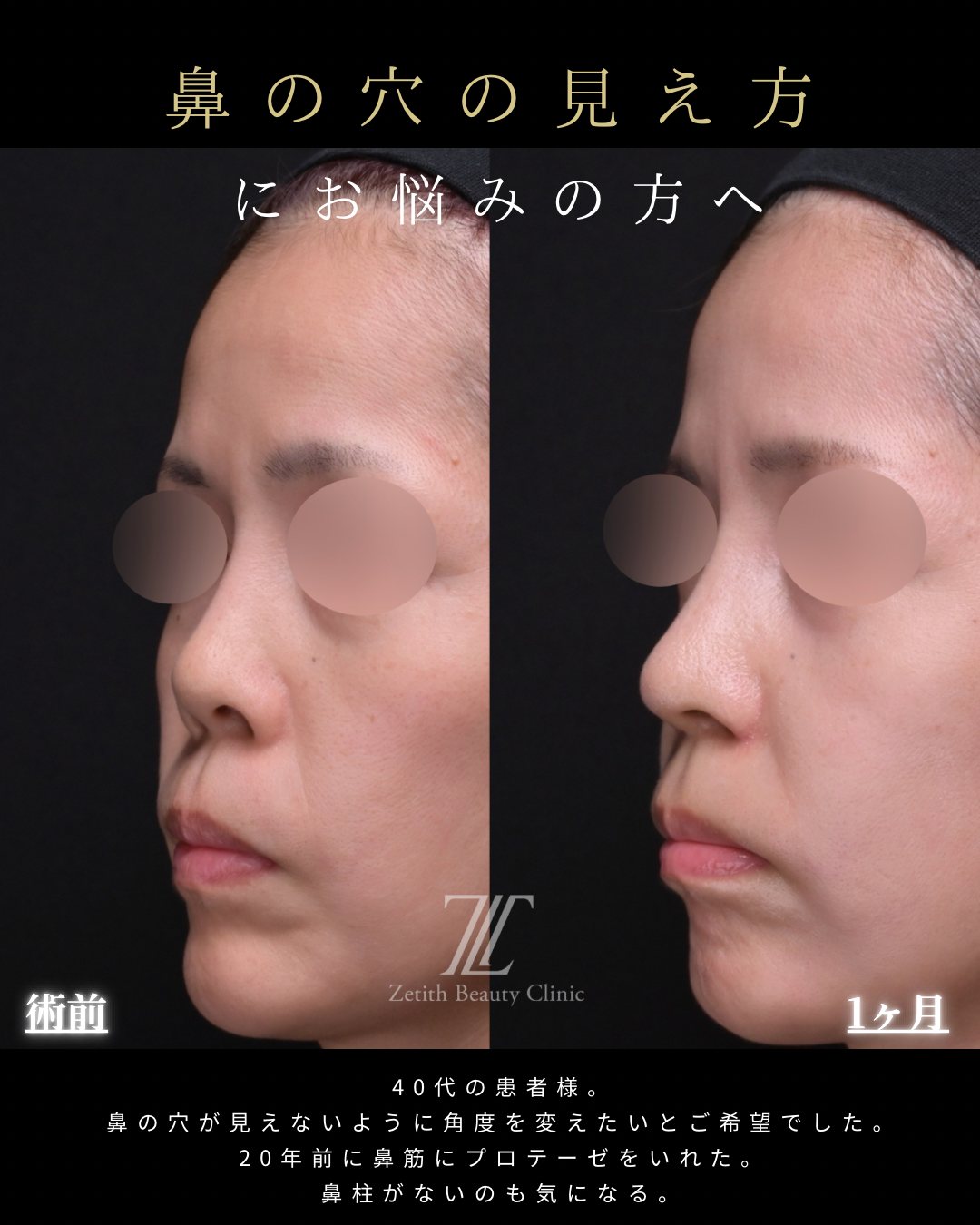
Cases are shown from three angles — front, oblique, and profile — because with the Neko procedure the connection from tip to columellar base to mouth is easiest to see in profile. Use the tabs to switch.
Case | Tip to columellar base and mouth area (closed technique with ear cartilage: septal extension + Neko procedure, and more)
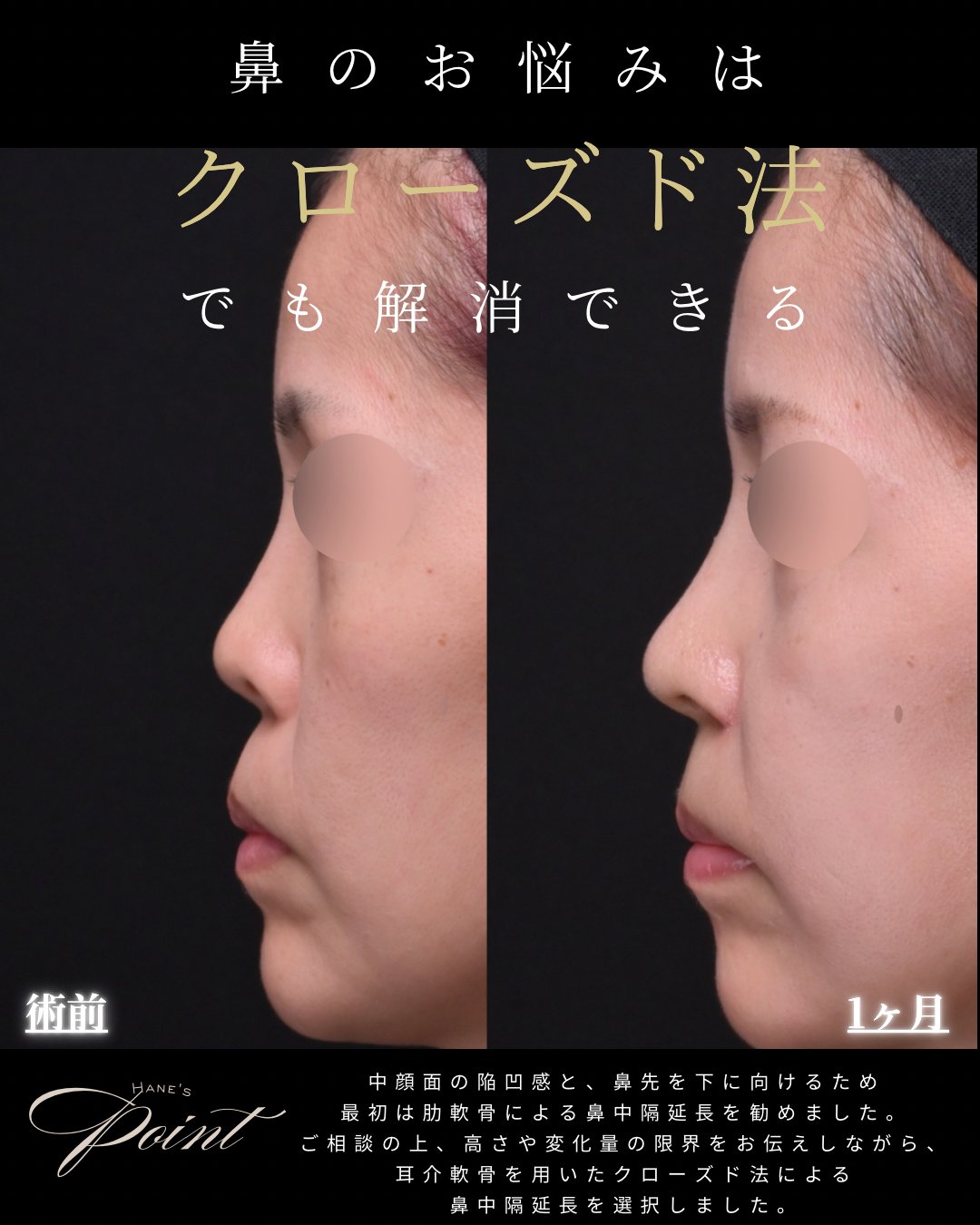
- Procedure
- Closed technique: septal extension (ear cartilage) + Neko procedure + Kizoku procedure + cartilage grafting + tip plasty + alar lift
- Price
- ¥1,130,000〜 (combination of multiple techniques)
- Main risks / side effects
- Swelling, bruising, asymmetry, infection, tip stiffness, individual variation in results, etc.
- Downtime
- About 1–2 weeks (photos taken 1 month after surgery)
* Patient in her 40s. To address concerns including a sunken midface, tip angle, and the appearance of the columellar base, multiple techniques were performed at once, including septal extension via the closed technique with ear cartilage and the Neko procedure. Shown from the front, oblique, and profile views (published with consent; eye area edited for privacy). Results vary by individual and involve risks and side effects. Elective treatment (not covered by insurance).
Cost
The Neko procedure is included in septal extension (there is no standalone fee). The price depends on the septal-extension material (tax included).
| Septal extension (ear cartilage) + Neko procedure | ¥880,000〜 |
|---|---|
| Septal extension (with rib cartilage) + Neko procedure | ¥1,100,000〜 |
Pricing details (additional fees / monitor program)
Downtime
Swelling and bruising usually settle within about 1–2 weeks. Because it is performed together with septal extension, you may feel tip swelling, tightness, and some odd sensations around the area under the nose for a while.
If rib cartilage is harvested, chest-wound pain may last several days to about a week. Recovery varies by individual, so we recommend scheduling surgery at least 1–2 months before any major event. For procedure-by-procedure recovery timelines, see the complete downtime guide.
Risks and Side Effects
The Neko procedure (including septal extension) can involve the following risks and side effects. Please be sure to review them.
Main risks and side effects
- Swelling, bruising, pain, puffiness (these usually ease with time)
- Asymmetry; changes in fullness and how the mouth area looks, depending on the amount placed
- If overfilled, the mouth area can conversely look pushed forward or develop an unnatural bulge
- Tip stiffness and tightness (because septal extension is involved)
- If ear cartilage is harvested: a scar behind the ear and temporary discomfort
- If rib cartilage is harvested: chest scar and pain, donor-site deformity, and rarely pneumothorax
- Infection, results that differ from the imagined outcome, individual variation in results
Revision of Surgery Performed Elsewhere
We also take consultations on reshaping after septal extension or procedures around the area under the nose performed at other clinics, tailored to your condition.
"The area under my nose was overfilled and looks unnatural" or "After rhinoplasty elsewhere, the way my mouth area looks bothers me" — we take on these consultations as well. Because the revision plan varies greatly with the condition, please let us first examine your current state. For the full picture of the techniques we can offer, see the revision section of the technique guide.
Frequently Asked Questions
Can I have the Neko procedure on its own?
The Neko procedure is performed during septal extension by suturing autologous tissue to your own septal cartilage, so as a rule it is done together with septal extension. It is not a procedure performed on its own. We explain the details at counseling.
Will the Neko procedure fix a protruding mouth?
It can refine how the area from under the nose to the mouth looks, but a protruding mouth caused by the teeth or jaw (maxillary/mandibular) skeleton itself projecting forward cannot be resolved by the Neko procedure alone. Orthodontics or jaw surgery may be indicated in some cases. Suitability is determined by examination, and results vary by individual.
Are implants such as silicone prostheses used?
Our Neko procedure uses only autologous tissue (ear or rib cartilage); no implants such as silicone prostheses are placed.
How do the Neko and Kizoku procedures differ?
The Neko procedure brings forward the recessed area under the nose (the base of the columella), while the Kizoku procedure fills the hollow at the base of the nostril wings to build definition — they refine different areas. Depending on the case, the two may be combined.
Will scars remain on my face?
Because it is performed together with septal extension via the closed technique, which leaves no scars on the skin surface, no visible scars remain on the face. Small scars remain at the donor sites (behind the ear or on the chest).
How much does it cost?
The Neko procedure is included in septal extension (there is no standalone fee). As a guide: septal extension (ear cartilage) ¥880,000〜, with rib cartilage ¥1,100,000〜 (tax included). The total varies with the techniques performed alongside.
أسئلة يمكنك طرحها بعد ذلك على الذكاء الاصطناعي
Considering the Neko Procedure in Fukuoka?
How the columellar base looks depends on the amount of autologous tissue placed and the design of the septal extension. A surgeon with more than 2,000 rhinoplasty procedures will examine you and propose exactly what you need.
* This article is intended to provide general medical information and does not guarantee results. The suitability, cost, and risks of treatment are determined individually through examination. Results vary from person to person. Rhinoplasty and the Neko procedure (septal extension) are elective treatments (not covered by insurance).