
Key Takeaways
- A dorsal hump (aquiline nose) means the middle of the bridge protrudes when viewed from the side (a raised area of bone and cartilage)
- People with a hump often have not just the bump but also insufficient tip height, making the tip look droopy and low
- So beyond smoothing the hump, we also refine the tip's height and rotation (with a strut, septal extension, or other approach to suit your condition), treating the septal cartilage "conservatively" (downtime is relatively short)
- Cost: ¥730,000 (case shown = hump reduction + tip plasty + cartilage graft + strut / open technique), published front, oblique, and profile
What Is a Dorsal Hump (Aquiline Nose)?
A dorsal hump — sometimes called an aquiline or hawk nose — means that the middle of the bridge arches outward when viewed from the side. It's caused by a raised area of bone and cartilage along the bridge, and it can affect your appearance in the following ways.
How a Dorsal Hump Shows Up
- Profile: A bump partway down the bridge keeps it from looking straight
- Tip: Often the tip lacks height and looks droopy and low
- Front: Depending on how light falls, the raised bone can stand out
A dorsal hump strongly shapes your profile. And most patients who come to us about one have not only the bump itself but also a tip that lacks height and looks droopy. That's why designing around the tip's height and rotation — not just smoothing the bump — is the key to a natural result.
Our Approach (Refining Tip Height & Rotation / Conservative Hump Correction)
Patients who consult us about a hump usually have more than the bump itself — their tip lacks height and looks droopy. So beyond smoothing the hump, adjusting the tip's height and rotation is often necessary too. We straighten the hump while also building the tip's height and rotation. How we construct the tip's foundation depends on your condition — a strut, septal extension, or another approach.
What We Prioritize
- Building tip height and rotation: Supporting a droopy, low-looking tip and refining its height and angle (strut, septal extension, or other approach, chosen for your condition)
- Conservative correction: We work on the septal cartilage rather than over-resecting, so the procedure is gentler and downtime relatively short
- Overall balance: We design for harmony between bridge and tip, checking not just the profile but the front and oblique views too
While we perform most procedures with the closed technique (incisions inside the nostrils), for hump correction we sometimes choose the open technique (a columella incision) to shape the bridge under direct vision — the case shown here used the open technique. The scar becomes less noticeable over time. For the tip procedures involved — tip plasty, cartilage grafts, and struts — see the complete technique guide; for the difference between the closed and open techniques, see the comprehensive guide.
Case Photos (Front, Oblique, Profile)
This case corrected a dorsal hump along with the tip's height and rotation (procedure details below). We publish the front and oblique views as well as the profile. Use the tabs to switch angles.
Case | Dorsal hump making the tip look low / Hump reduction + tip plasty + cartilage graft + strut
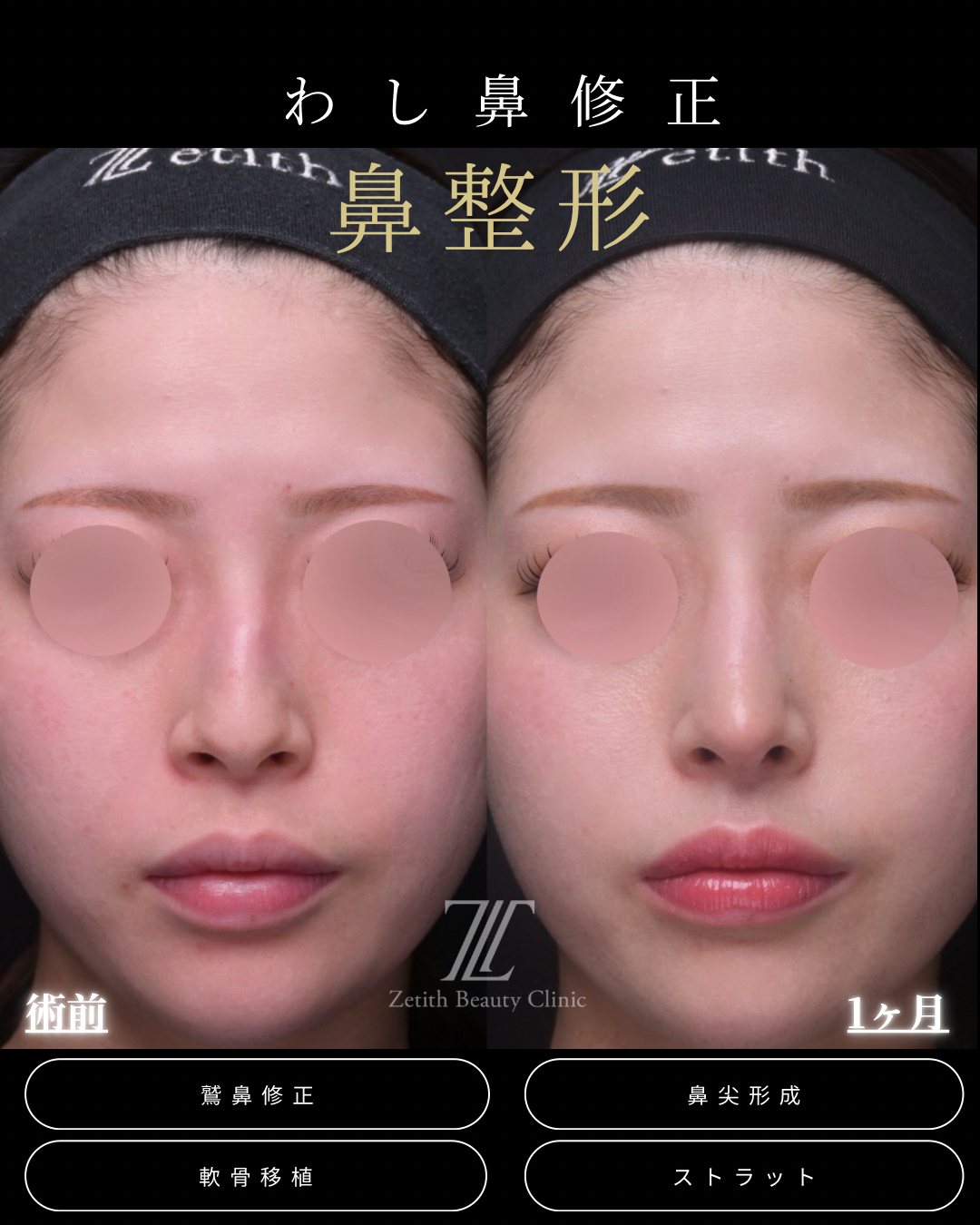
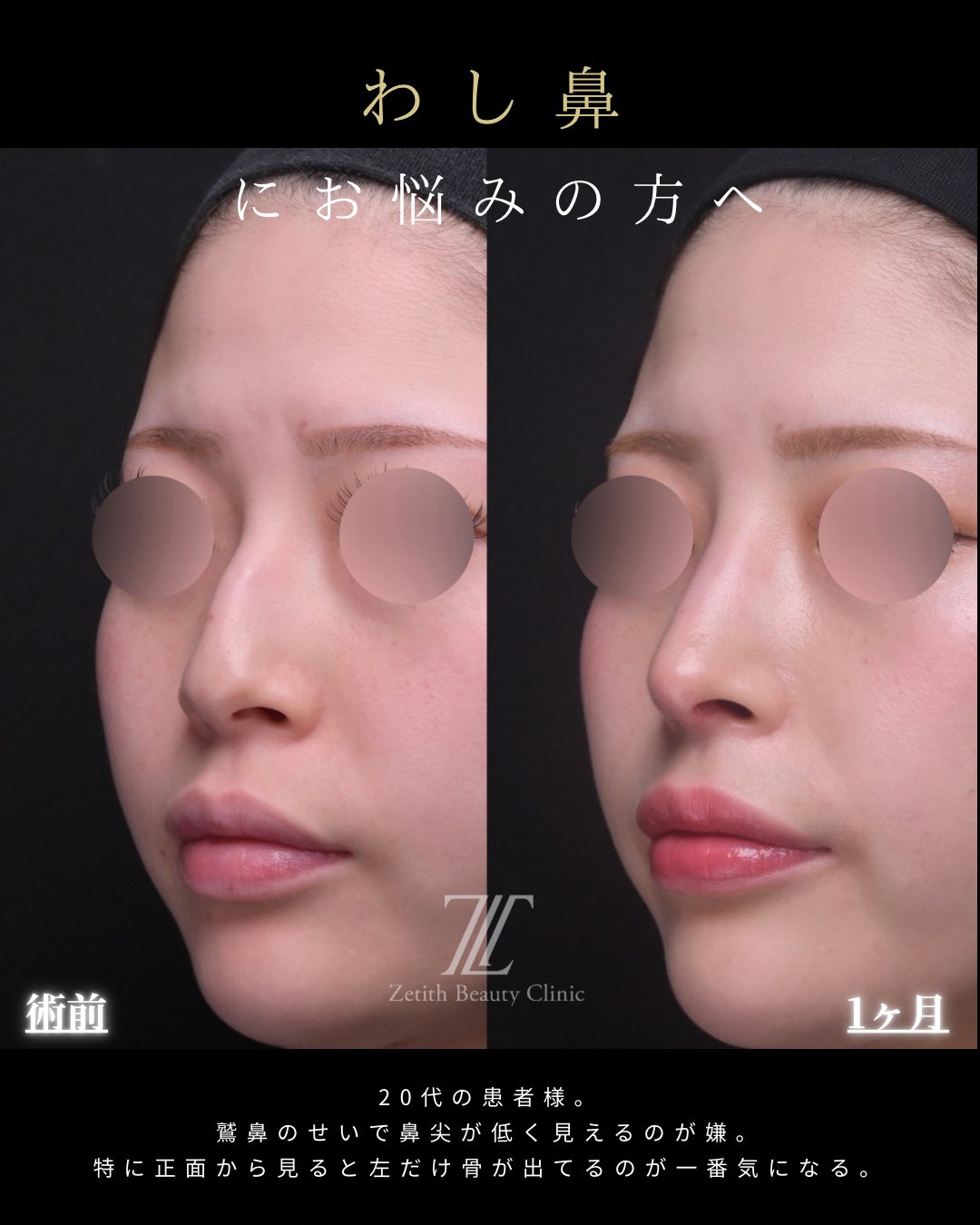
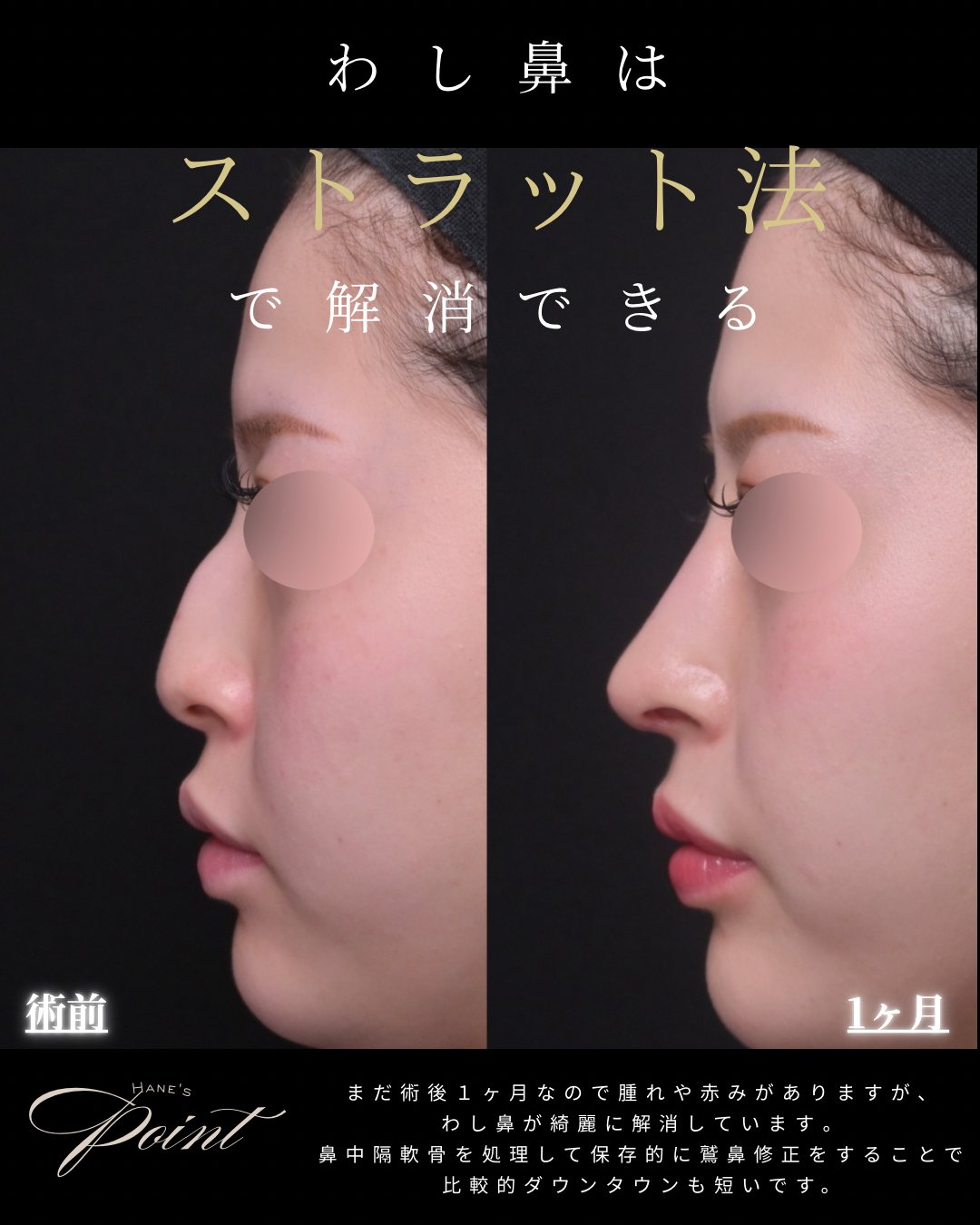
- Procedure
- Open technique: hump reduction + tip plasty + cartilage graft + strut (conservative correction with septal cartilage work)
- Price
- ¥730,000
- Main risks / side effects
- Swelling, bruising, asymmetry, bridge irregularities, relapse, infection, individual variation in results, etc.
- Downtime
- About 1–2 weeks (photos taken 1 month post-op)
* Patient in her 20s, whose concerns were "my hump makes my tip look low" and "the bone protrudes when seen from the front" (published with consent; eye area edited to protect privacy). Results vary by individual, and risks and side effects may occur. Elective (non-insured) procedure.
Cost
This is the price for the case shown (hump reduction + tip plasty + cartilage graft + strut). It varies with the combination of procedures.
| Hump reduction + tip plasty + cartilage graft + strut | ¥730,000 |
|---|
More about pricing (additional fees & monitor discounts)
Downtime & Risks
Swelling and bruising usually settle within 1–2 weeks. Because we correct the hump conservatively by working on the septal cartilage, downtime tends to be relatively short — though recovery varies by individual.
Main Risks & Side Effects
- Swelling, bruising, pain (usually improve over time)
- Bridge irregularities or steps, asymmetry
- Relapse, or a result that differs from the envisioned outcome
- Infection; results vary by individual
Frequently Asked Questions
How is a dorsal hump (aquiline nose) corrected?
We smooth the protruding bone and cartilage along the bridge so the profile line becomes gentle and straight. In addition, since people with a hump often have a tip that lacks height and looks droopy, we also refine the tip's height and rotation. How the foundation is built — a strut, septal extension, or another method — depends on your condition. We treat the septal cartilage conservatively. The exact approach is decided at your examination.
If you shave down the bump, won't my tip look low and unnatural?
If only the bump is reduced, the tip's pre-existing lack of height can actually become more conspicuous and throw off the balance. That's why we refine the tip's height and rotation at the same time (with a strut, septal extension, etc.), designing around the balance of the front, oblique, and profile views.
How long is the downtime?
Expect swelling and bruising for about 1–2 weeks. Because we correct the hump conservatively, downtime tends to be relatively short, though recovery varies by individual. The case photos shown were also taken at 1 month post-op.
Will there be a visible scar?
For hump correction, we sometimes choose the open technique (a columella incision) so we can shape the bridge under direct vision. That scar becomes less noticeable over time. Depending on your condition, the closed technique (incisions inside the nostrils) may be used instead — the approach is decided at your examination.
คำถามถัดไปที่ถาม AI ได้
Consult Us About Your Dorsal Hump in Fukuoka
A hump looks most natural — in profile and from the front — when the tip's height and rotation are refined along with the bridge. Conservative, never over-resected: our director, with 2,000+ rhinoplasty cases, will examine you and propose a plan.
* This article is intended to provide general medical information and does not guarantee results. Suitability, costs, and risks of treatment are determined individually through examination. Results vary by individual. Rhinoplasty is an elective procedure not covered by insurance. Case photos are published with patient consent, with the eye area edited to protect privacy.