
Key Takeaways
- The three giveaways of a nose job are scars, downtime, and design
- The closed technique rarely leaves a visible external scar (incisions are made only inside the nostrils)
- "Undetectable" doesn't mean "only small changes" — the key is harmony with the whole face
- We recommend completing surgery 1–2 months before any major event
The 3 Reasons a Nose Job Gets Noticed
When people say a nose job was "found out," it almost always traces back to one of three things. Put another way: control these three, and your rhinoplasty becomes far harder to notice.
The 3 Giveaways
- 1. Visible external scars: With techniques that cut the columella (the strip of skin between the nostrils), scars can be noticed at close range
- 2. Downtime swelling: Post-op swelling, bruising, and the nasal cast are easy to spot for a while after surgery
- 3. Unnatural design: An overdone shape that doesn't suit the face reads as "surgical" regardless of how much was actually changed
Where Are the Scars? With the Closed Technique, Nothing Shows Outside
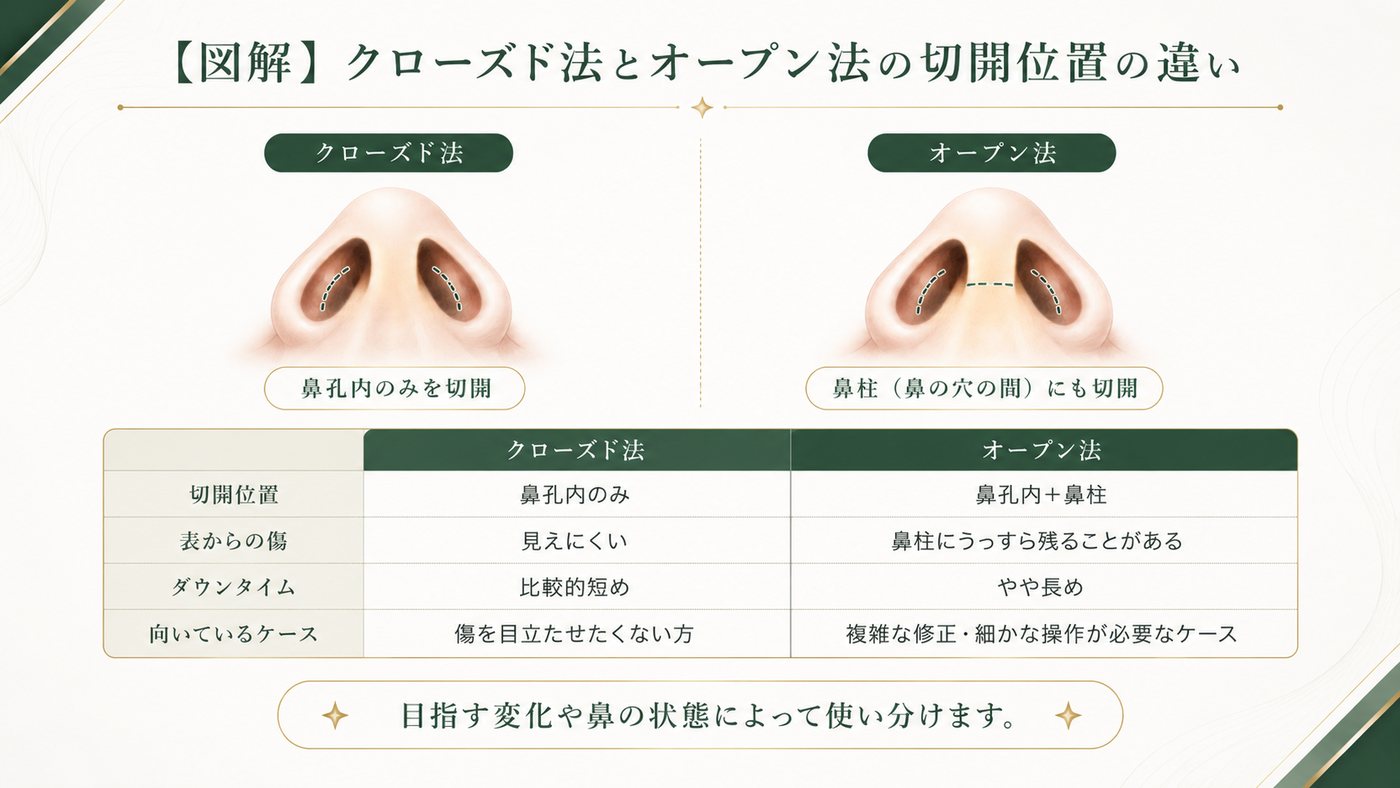
The closed technique makes incisions only inside the nostrils, leaving the external skin uncut. Its greatest strength is that scars are barely visible from the outside.
There are two main incision approaches in rhinoplasty. The other, the open technique, involves an incision across the columella, so the scar can be noticeable at close, intimate distances.
Minimize Downtime, Minimize Attention
A surprisingly big giveaway is the post-op swelling, bruising, and cast. Because the closed technique leaves the columella uncut, swelling tends to subside faster (the cast stays on for about 7 days, and major swelling usually settles within 1–2 weeks — individual results vary).
- We recommend completing surgery 1–2 months before any major event (reunion, business trip, etc.)
- Seasons or settings where wearing a mask looks natural make downtime much easier to get through
- When you can resume glasses and makeup depends on your procedure — we'll advise you at your consultation
For a detailed recovery timeline, see our complete downtime guide.
Watch the reel on Instagram →
* Includes the patient's own impressions. Results and experiences vary by individual.
How to Design a Nose That Goes Unnoticed
It's a common misconception, but "undetectable" does not mean "only small changes." Even a dramatic change won't look "done" if it harmonizes with your natural features.
What matters is not how much you change, but designing for balance with the whole face.
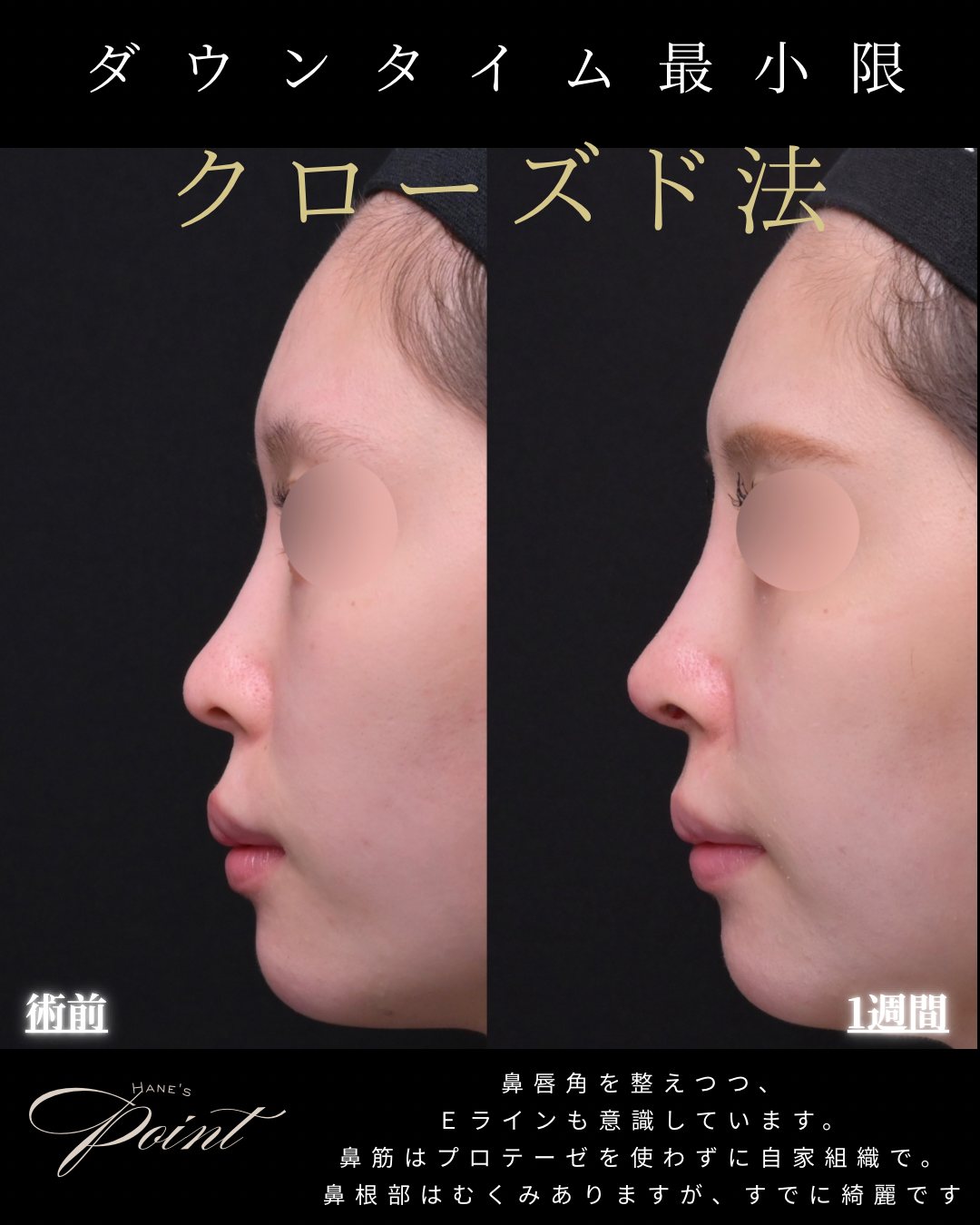
Before & After (Front, Oblique, Profile)
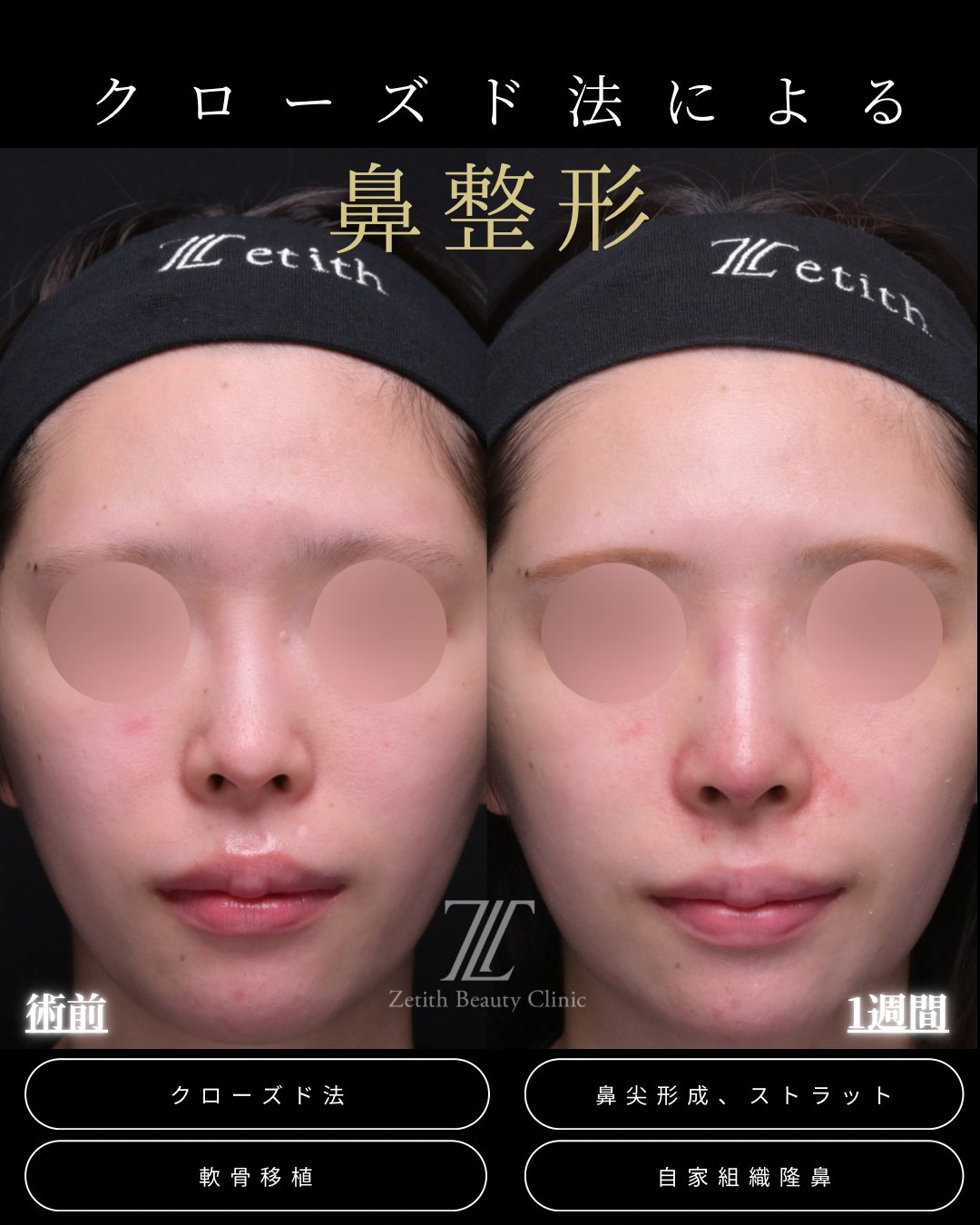
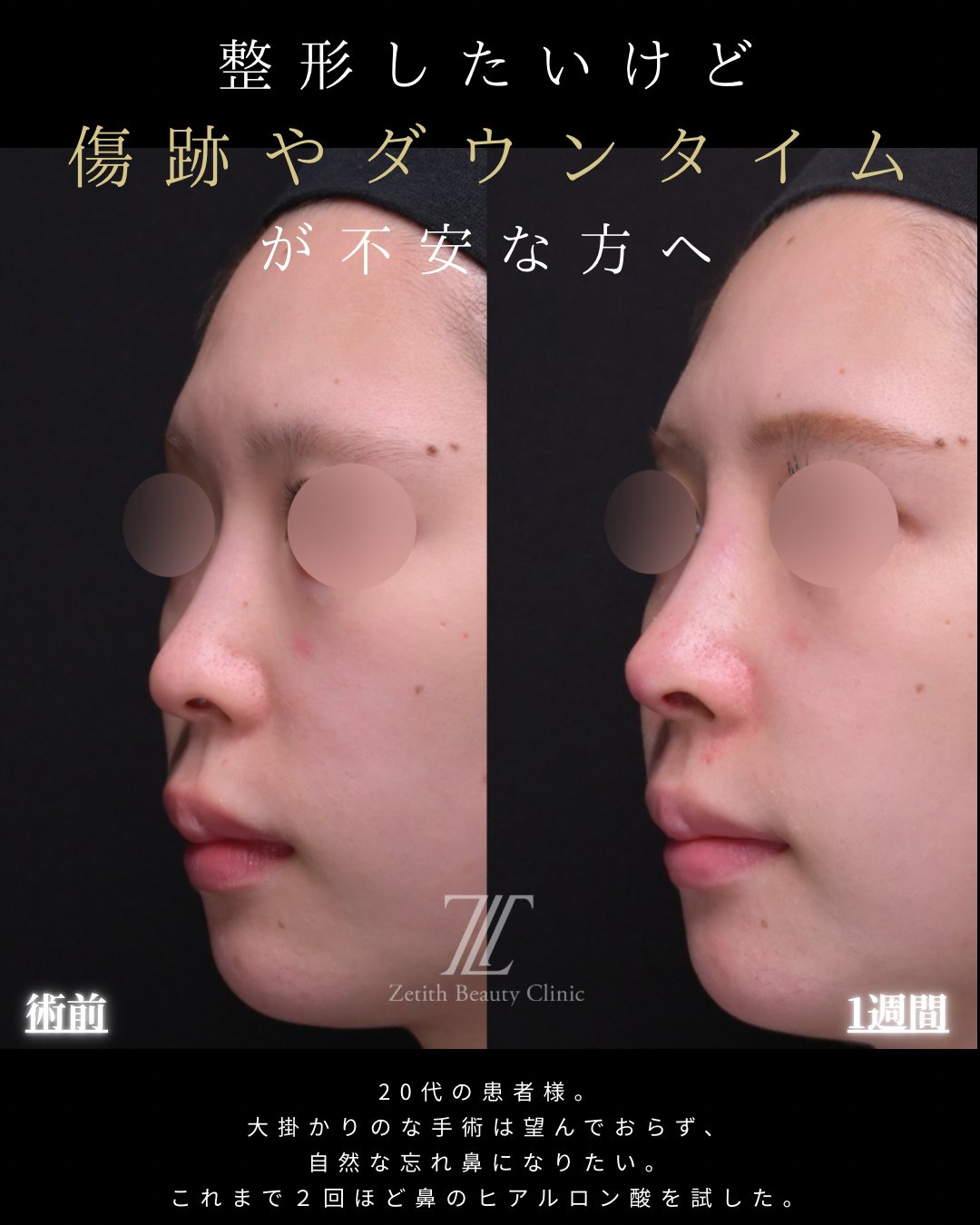
See for yourself that no scar shows on the outside and that the result blends in naturally from every direction — front, oblique, and profile. Use the tabs to switch angles.
Case | Low nasal bridge / Closed technique: tip plasty + cartilage graft + strut + autologous augmentation (ear cartilage)
- Procedure
- Closed-technique tip plasty + cartilage graft + strut + autologous augmentation (ear cartilage)
- Price
- ¥780,000〜 (varies by combination)
- Main risks / side effects
- Swelling, bruising, asymmetry, infection, individual variation in results, etc.
- Downtime
- About 1–2 weeks (photos taken 1 week post-op)
* Photos shown from three angles: front, oblique, and profile. Patient in her 20s (published with consent; eye area edited to protect privacy). Results vary by individual, and risks and side effects may occur. This is an elective (non-insured) procedure.
Risks & Side Effects
Rhinoplasty is a medical procedure and may involve the risks and side effects listed below. We cannot promise that your surgery will be "absolutely undetectable" or "guaranteed to look natural."
Main Risks & Side Effects
- Swelling, bruising, pain, puffiness (may be visibly noticeable for a while after surgery)
- Asymmetry, or a result that differs from the envisioned outcome
- Infection, wounds or tightness inside the nostrils, individual differences in how scars heal
- If an implant is used, possible displacement or a visible outline
Frequently Asked Questions
Will my coworkers or classmates find out?
The closed technique rarely leaves a visible external scar, but for a while after surgery, swelling, bruising, and the nasal cast could give it away. At your consultation we can plan a schedule together, including how to arrange time off.
When can I wear makeup again?
Makeup on areas other than the nose is usually possible fairly early. For the nose itself, the general guideline is after the cast comes off and stitches are removed (about 7 days post-op). This varies by procedure, so we'll advise you at your appointment.
When can I wear glasses again?
For procedures that place structural support along the nasal bridge, we'll ask you to avoid putting pressure on the nose for a certain period. The timing depends on the procedure, so we'll let you know at your appointment.
If I make a big change, will people notice?
What matters more than the amount of change is harmony with the whole face. By designing around the balance of your eyes, mouth, and profile, we aim for a result that blends in even with a substantial change. That said, results vary by individual.
أسئلة يمكنك طرحها بعد ذلك على الذكاء الاصطناعي
Want to Change Your Nose Without Anyone Knowing?
Scars, downtime, design — with the right planning, all three can be made far harder to notice. Our surgeon will examine you and propose an approach that fits your lifestyle.
* This article is intended to provide general medical information and does not guarantee results. Suitability, costs, and risks of treatment are determined individually through examination. Results vary by individual. Rhinoplasty is an elective procedure not covered by insurance.